







Introduction
Business hours are one of the most important pieces of information customers look for before visiting a store, contacting a company, or booking a service. Accurate operating hours help customers plan their visits, reduce frustration, improve trust, and increase sales. Whether you operate a retail store, restaurant, medical clinic, online business with customer support, or professional service, clearly communicating your business hours can significantly influence customer satisfaction and local search visibility.
Modern consumers rely on search engines, maps, social media profiles, and business websites to confirm opening and closing times before making purchasing decisions. Inconsistent or outdated hours often lead to missed opportunities, negative reviews, and lost revenue. This guide explains how to establish effective business hours, display them across every customer touchpoint, manage holiday schedules, and optimize operating hours to improve customer experience and business performance.
Define Business Hours That Match Customer Demand
Your business hours should reflect when your customers are most likely to need your products or services. Instead of selecting arbitrary opening and closing times, analyze customer behavior, industry trends, and staffing availability.
Start by evaluating:
- Customer traffic patterns
- Sales history
- Competitor schedules
- Employee availability
- Seasonal demand
- Local events
- Time zone considerations for online businesses
For example, a coffee shop often experiences its highest traffic early in the morning, while a restaurant typically sees increased activity during lunch and dinner. A customer support center serving international clients may need extended or even 24-hour coverage.
Choosing hours based on real demand allows businesses to maximize revenue while controlling labor costs.
Typical Business Hours by Industry
| Business Type | Common Operating Hours | Peak Customer Time |
| Retail Store | 9 AM to 9 PM | Evenings and weekends |
| Restaurant | 11 AM to 10 PM | Lunch and dinner |
| Coffee Shop | 6 AM to 7 PM | Morning |
| Medical Clinic | 8 AM to 5 PM | Morning and afternoon |
| Gym | 5 AM to 11 PM | Early morning and evening |
| Bank | 9 AM to 5 PM | Weekdays |
| Salon | 9 AM to 7 PM | Afternoon and weekends |
Create a Consistent Weekly Schedule
Customers appreciate consistency. Predictable schedules build trust and reduce confusion.
A weekly schedule should clearly indicate:
| Day | Opening | Closing |
| Monday | 9:00 AM | 6:00 PM |
| Tuesday | 9:00 AM | 6:00 PM |
| Wednesday | 9:00 AM | 6:00 PM |
| Thursday | 9:00 AM | 7:00 PM |
| Friday | 9:00 AM | 7:00 PM |
| Saturday | 10:00 AM | 5:00 PM |
| Sunday | Closed |
Businesses with multiple shifts should also indicate break periods if applicable.
Consistency helps customers remember your availability and reduces unnecessary phone calls asking whether you’re open.
Display Business Hours Across Every Customer Channel

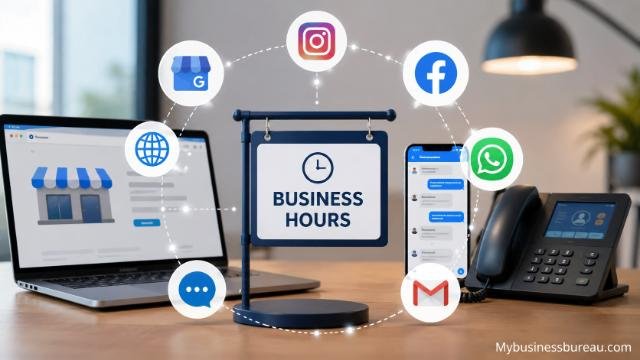
Customers search for operating hours in multiple locations before making a purchase decision. Every platform should display identical information.
Include your hours on:
- Company website
- Contact page
- Homepage
- Search engine business profile
- Online maps
- Social media profiles
- Booking platforms
- Email signatures
- Storefront signage
- Mobile applications
Maintaining identical information across all channels improves customer confidence and minimizes confusion.
Whenever operating hours change, every platform should be updated immediately.
Adjust Business Hours for Holidays and Special Events
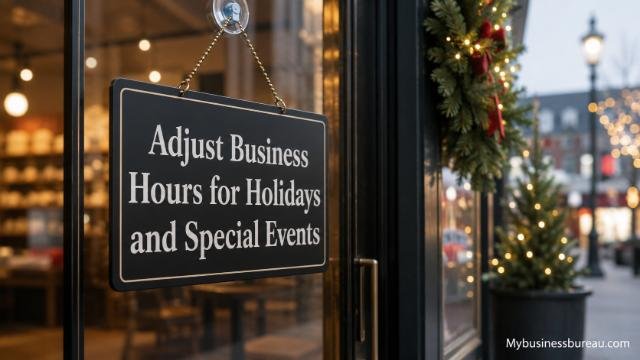
Holiday schedules frequently differ from normal operating hours. Customers appreciate advance notice rather than arriving to find a business unexpectedly closed.
Examples include:
- National holidays
- Religious holidays
- Company events
- Staff training
- Inventory counts
- Severe weather
- Emergency closures
Post holiday schedules several weeks in advance whenever possible.
Clear communication reduces customer frustration and prevents unnecessary travel.
Extend Business Hours When Demand Increases
Certain periods create unusually high customer demand.
Examples include:
- Holiday shopping seasons
- Black Friday promotions
- Back-to-school sales
- Tax season
- Summer tourism
- Product launches
- Weekend events
Temporary extended hours can significantly increase revenue while improving customer convenience.
Before extending hours, evaluate:
- Staffing costs
- Security requirements
- Utility expenses
- Inventory availability
- Customer demand forecasts
Data-driven decisions prevent unnecessary operating costs.
Reduce Customer Confusion with Clear Signage
Physical signage remains an important communication tool.
Business hour signs should include:
- Opening time
- Closing time
- Days of operation
- Holiday notices
- Contact information
- Website address
Good signage characteristics include:
- Large readable fonts
- High contrast colors
- Weather-resistant materials
- Proper lighting
- Eye-level placement
Indoor and outdoor signs should display the same information.
Monitor Customer Behavior to Improve Operating Hours
Business hours should evolve as customer behavior changes.
Useful performance indicators include:
- Foot traffic
- Sales per hour
- Appointment bookings
- Customer inquiries
- Website visits
- Phone calls
- Online orders
Businesses often discover that certain hours generate little revenue while others are consistently busy.
Regular analysis allows owners to optimize staffing and profitability.
Coordinate Employee Scheduling with Business Hours
Operating hours directly affect workforce management.
Managers should balance:
- Employee availability
- Labor regulations
- Break schedules
- Shift overlap
- Overtime costs
- Customer demand
Efficient scheduling ensures customers receive quality service throughout the day while preventing employee burnout.
Workforce planning software can simplify scheduling for businesses with multiple employees or locations.
Optimize Business Hours for Local Search Visibility
Search engines prioritize businesses with complete and accurate information.
To improve local visibility:
- Keep hours updated everywhere.
- Include holiday hours.
- Verify business listings regularly.
- Respond to customer questions about availability.
- Update temporary closures promptly.
- Maintain consistent business information.
Accurate operating hours increase customer trust and reduce negative experiences caused by outdated listings.
Businesses that consistently maintain their information often receive more visits, phone calls, and direction requests from local search results.
Offer Flexible Customer Service Hours
Customer service availability does not always need to match physical store hours.
Businesses can provide:
- Live chat
- Email support
- Telephone support
- Self-service knowledge bases
- AI chat assistants
- Appointment scheduling
Extended support availability improves customer satisfaction, especially for online businesses serving multiple time zones.
Clearly distinguish between customer support hours and physical operating hours to avoid misunderstandings.
Communicate Temporary Changes Effectively
Unexpected situations occasionally require immediate schedule adjustments.
Examples include:
- Power outages
- Staff shortages
- Renovations
- Weather emergencies
- Public health concerns
- Equipment failures
When changes occur:
- Update your website.
- Modify online listings.
- Post on social media.
- Place notices at entrances.
- Notify booked customers directly.
- Update voicemail greetings.
Fast communication protects customer relationships during disruptions.
Balance Convenience with Operating Costs
Longer business hours are not always more profitable.
Evaluate factors such as:
- Labor expenses
- Utility costs
- Security costs
- Cleaning expenses
- Sales generated
- Customer demand
Sometimes reducing hours during slow periods increases profitability without negatively affecting customers.
Regular performance reviews help identify the optimal balance between accessibility and operational efficiency.
Factors That Influence Business Hours
| Factor | Impact on Operating Hours |
| Customer demand | Determines peak periods |
| Employee availability | Affects staffing capacity |
| Competition | Influences customer expectations |
| Local regulations | May restrict operating times |
| Seasonality | Changes daily traffic |
| Holidays | Requires temporary adjustments |
| Budget | Controls staffing and utilities |
Improve Customer Satisfaction Through Reliable Hours
Reliability builds trust. Customers expect businesses to open and close exactly as advertised.
Best practices include:
- Open on time every day.
- Close according to posted schedules.
- Update listings immediately after changes.
- Train staff to communicate hours consistently.
- Monitor customer feedback regarding availability.
Businesses that consistently honor their posted schedules experience fewer complaints and stronger customer loyalty.
Dependability often becomes a competitive advantage, particularly in industries where customers value convenience and predictability.
Conclusion
Business hours are much more than a simple schedule posted on a door. They influence customer satisfaction, employee management, operational efficiency, local search visibility, and overall profitability. Carefully planned operating hours help customers access your products and services when they need them most while allowing your organization to manage staffing and expenses effectively.
By establishing customer-focused schedules, maintaining consistent information across every platform, preparing for holidays and special events, monitoring performance data, and communicating changes promptly, businesses can create a dependable experience that strengthens trust and encourages repeat visits. Regularly reviewing and refining your business hours ensures they continue to align with customer expectations and business goals.
FAQ’s
Business hours are the specific times and days when a company is open to serve customers, provide services, or conduct normal operations.
Business hours should be updated immediately whenever permanent or temporary changes occur, including holiday schedules, special events, renovations, or emergency closures.
Accurate hours improve customer trust, reduce missed visits, prevent negative reviews, and help customers plan their interactions with your business.
Yes. Even if sales occur around the clock, publishing customer support, live chat, or phone availability helps set clear expectations.
Posting holiday hours in advance helps customers avoid unnecessary trips and demonstrates that your business values clear communication.
Yes. Adjusting hours to match customer demand, seasonal trends, and peak shopping periods can improve sales while making better use of staffing and operational resources.


