







Introduction
A Wisconsin secretary of state business search is one of the most effective ways to verify company information, confirm registration details, research competitors, and perform due diligence before entering a business relationship. Whether you are an entrepreneur, investor, attorney, lender, supplier, or consumer, access to accurate business records helps reduce risk and improve decision-making.
Wisconsin business records contain valuable information such as business names, registration status, filing history, registered agent details, entity type, and organizational information. Understanding how to search these records efficiently can save time and help ensure compliance with state requirements. This guide explains every major aspect of conducting a Wisconsin business search, interpreting the results, and using the information effectively.
Access Official Wisconsin Business Records
The first step in performing a Wisconsin secretary of state business search is locating the appropriate state business records database. Wisconsin maintains business entity information through the state’s business registration system, allowing users to search for corporations, limited liability companies, partnerships, and other registered entities.
The business search platform serves as a central repository for registration data. Users can search for an existing company, verify legal status, confirm name availability, or gather information about a specific organization. The database is designed to provide transparency and support commercial transactions across the state.
Accessing official records is important because third-party databases may contain outdated information. Official state records typically offer the most current filing status, business standing, and registration details available.
Gather Required Information Before Searching
Before starting a search, collect as much information as possible about the business you want to locate. Having accurate information improves search efficiency and reduces the likelihood of reviewing irrelevant results.
Useful information includes the exact business name, partial business name, registered agent name, business identification number, filing number, or principal office location. Even limited information can help narrow search results significantly.
When conducting due diligence, it is beneficial to gather information from multiple sources, including contracts, invoices, websites, marketing materials, and government records. Cross-referencing details helps verify accuracy and identify inconsistencies that may require further investigation.
Search by Business Name
Searching by business name is the most common method used in Wisconsin business record searches. Entering the full legal name generally produces the most accurate results.
If the exact name is unknown, users can search using partial words or key phrases. This approach is particularly useful when researching companies with lengthy names, abbreviations, or variations in spelling. A broader search may reveal multiple entities with similar names.
Business name searches help entrepreneurs determine whether a desired company name is already registered. They also assist vendors, customers, and investors in confirming that a company exists and operates under a legally recognized business structure.
Business Name Search Benefits
| Benefit | Purpose | Result |
| Verify legitimacy | Confirm registration | Reduced risk |
| Research competitors | Review existing companies | Better market analysis |
| Check name availability | Prepare new filings | Faster registration |
| Validate contracts | Confirm legal identity | Improved compliance |
| Investigate partners | Verify company details | Better decision-making |
Search Using a Business Identification Number
A business identification number often provides the most precise search results. Unlike company names, identification numbers are unique and eliminate confusion caused by similar naming conventions.
Businesses may use state-issued filing numbers, registration numbers, or other unique identifiers. Entering the correct number usually directs users to a single business record.
This method is particularly useful for legal professionals, financial institutions, and compliance officers who require exact matches during audits, mergers, acquisitions, financing transactions, or litigation matters.
Review Entity Type Information
After locating a business record, examine the entity type carefully. The entity structure affects ownership, taxation, liability protection, management responsibilities, and regulatory requirements.
Wisconsin businesses commonly operate as limited liability companies, corporations, limited partnerships, general partnerships, nonprofit corporations, and sole proprietorships. Each structure serves different operational and legal purposes.
Understanding the entity type helps determine how the organization functions. For example, an LLC typically provides liability protection with management flexibility, while a corporation may have shareholders, directors, and officers operating under a formal governance framework.
Common Wisconsin Business Structures
| Entity Type | Liability Protection | Ownership Structure | Typical Use |
| LLC | Yes | Members | Small and medium businesses |
| Corporation | Yes | Shareholders | Large businesses |
| Nonprofit Corporation | Yes | Directors and members | Charitable organizations |
| Limited Partnership | Partial | General and limited partners | Investment ventures |
| General Partnership | Limited | Partners | Professional services |
| Sole Proprietorship | No | Individual owner | Small independent businesses |
Verify Business Status and Standing
One of the most important pieces of information within a business record is the company’s status. Status indicators reveal whether an entity remains active, dissolved, administratively terminated, or otherwise inactive.
An active status generally indicates that the business has maintained required filings and remains authorized to operate. Inactive statuses may signal compliance issues, voluntary dissolution, mergers, or other organizational changes.
Reviewing status information is essential before signing contracts, extending credit, purchasing assets, or entering strategic partnerships. Businesses in poor standing may face operational restrictions or legal complications that affect future transactions.
Examine Registered Agent Details
The registered agent serves as the official recipient of legal notices, lawsuits, and government correspondence. Wisconsin business records often include registered agent information that can assist with communication and legal service requirements.
A registered agent may be an individual or a professional service company authorized to receive documents on behalf of the business. Maintaining accurate registered agent information is generally a legal requirement for many entity types.
When evaluating a company, reviewing registered agent information can help confirm operational legitimacy and provide insight into the company’s compliance practices. Frequent changes or outdated information may warrant additional investigation.
Analyze Filing History and Corporate Records

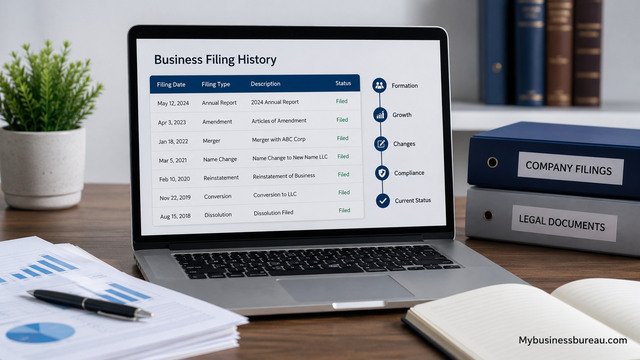
Business filings create a historical record of organizational activity. Reviewing filing history can reveal important developments that affect a company’s operations and legal standing.
Common filings include annual reports, amendments, mergers, conversions, reinstatements, name changes, and dissolution documents. These records help users understand how a business has evolved over time.
A detailed review of filing history may uncover ownership changes, structural reorganizations, expansions, or compliance concerns. This information is valuable during due diligence, lending reviews, acquisitions, and partnership evaluations.
Confirm Business Name Availability for New Registration
Entrepreneurs often use Wisconsin business searches to determine whether a desired company name is available before forming a new business.
Conducting a thorough search helps identify existing names that could create conflicts. State agencies typically evaluate name distinguishability to prevent public confusion and protect existing businesses.
Beyond state registration records, entrepreneurs should also review domain names, trademarks, social media availability, and industry-specific registrations. A comprehensive approach reduces branding conflicts and supports long-term business growth.
Compare Similar Business Entities
Many Wisconsin business searches return multiple entities with similar names. Distinguishing between these records requires careful analysis of key identifying information.
Important comparison factors include entity type, filing date, registered office location, business status, and identification number. Examining these details helps ensure that the correct company is selected.
This comparison process becomes especially important when conducting legal research, evaluating competitors, or verifying information supplied by a vendor, contractor, or prospective business partner.
Investigate Business Ownership Indicators
Although ownership information may vary depending on entity type and filing requirements, Wisconsin business records often provide clues about management and organizational control.
Corporations may identify directors and officers, while LLC filings may indicate managers or authorized representatives. These records can help stakeholders understand who holds decision-making authority.
Ownership-related information supports vendor screening, investment analysis, litigation preparation, and compliance reviews. Understanding organizational leadership can also facilitate communication during negotiations and business transactions.
Evaluate Compliance and Regulatory History
A business search can reveal more than basic registration information. It can also serve as a starting point for evaluating regulatory compliance and organizational reliability.
Consistent filing activity often demonstrates ongoing attention to legal obligations. Missed filings, administrative actions, or repeated reinstatements may indicate operational challenges or compliance weaknesses.
While business records alone do not provide a complete picture, they offer valuable indicators that can guide further investigation. Combining state records with licensing information, financial analysis, and industry research creates a more comprehensive evaluation process.
Conduct Due Diligence Before Business Transactions
Due diligence involves verifying facts before entering a financial or contractual relationship. Wisconsin business searches play an important role in this process.
Before signing agreements, organizations should confirm entity existence, registration status, legal name accuracy, and authorized representatives. These steps reduce exposure to fraud, disputes, and administrative complications.
Proper due diligence benefits lenders, suppliers, investors, landlords, and service providers. Even a simple business search can uncover issues that warrant additional review before proceeding with a transaction.
Use Business Search Data for Competitive Research
Business databases provide valuable market intelligence for entrepreneurs and business owners. By reviewing competitors’ registration information, organizations can better understand market dynamics.
Research may reveal company longevity, organizational structure, expansion patterns, and industry participation. This information helps businesses benchmark their own growth and identify opportunities for differentiation.
Competitive analysis should be combined with broader market research, customer insights, and financial data to support strategic planning and informed decision-making.
Monitor Existing Business Records Regularly
Business information can change over time. New filings, amendments, mergers, and administrative actions may alter an organization’s legal status and operational structure.
Regular monitoring helps businesses protect their interests and stay informed about important developments involving vendors, competitors, customers, and partners. Organizations that rely on long-term commercial relationships often benefit from periodic record reviews.
Monitoring also assists business owners in ensuring that their own filings remain current and accurate. Prompt updates reduce compliance risks and support uninterrupted operations.
Resolve Common Search Challenges
Users occasionally encounter difficulties when searching Wisconsin business records. Understanding common issues can improve search effectiveness.
Misspellings represent one of the most frequent challenges. A company may be registered under a legal name that differs from its branding or marketing materials. Using partial keywords often helps identify the correct entity.
Another common issue involves outdated assumptions about business status. Companies may merge, convert entity types, or change names over time. Reviewing filing history can clarify these situations and reveal the organization’s current structure.
Searches may also produce multiple results with nearly identical names. Comparing identification numbers, filing dates, and status information helps ensure accurate selection.
Protect Your Business Through Accurate Record Management
Business owners should periodically review their own state records to ensure accuracy. Maintaining current information supports legal compliance and improves public trust.
Important records that should remain current include registered agent details, principal office addresses, management information, and annual filings. Inaccurate information can lead to missed notices, administrative penalties, or operational disruptions.
Routine record maintenance also enhances credibility with lenders, investors, customers, and regulatory agencies. A well-maintained business record reflects organizational professionalism and attention to compliance obligations.
Use Wisconsin Business Searches for Legal Research
Attorneys, paralegals, and compliance professionals frequently rely on business searches during legal investigations and case preparation.
Business records can help confirm entity existence, identify authorized representatives, establish organizational timelines, and verify registration status. These details often support contract disputes, litigation matters, asset investigations, and regulatory reviews.
Although business records may not answer every legal question, they provide foundational information that supports broader legal analysis and documentation efforts.
Leverage Business Records for Investment Decisions
Investors often evaluate business registration information before committing capital. State records provide objective data regarding organizational structure and operational history.
Active status, consistent filing compliance, and long-term registration history may indicate organizational stability. Conversely, irregular filing patterns or inactive status may signal concerns requiring further review.
Business search results should be combined with financial statements, operational performance metrics, market analysis, and management evaluations to support informed investment decisions.
Conclusion
A Wisconsin secretary of state business search is a powerful tool for verifying company information, assessing compliance, conducting due diligence, and supporting informed business decisions. Whether you are researching a competitor, validating a potential partner, confirming registration status, or checking name availability, access to accurate state business records provides valuable insight.
By understanding how to search effectively, review entity information, analyze filing history, verify status, and interpret organizational details, users can make better decisions while reducing risk. Regular use of Wisconsin business records supports transparency, compliance, and confidence across a wide range of commercial activities.
Visit mybusinessbureau.com for expert business insights and smart growth strategies.
FAQ’s
You can access Wisconsin business records through the state’s official business entity database and search using a company name, filing number, or other identifying information.
Typical records include business name, entity type, status, filing history, registered agent information, and registration details.
Yes. A business search helps determine whether a desired name is already registered or potentially conflicts with an existing entity.
An active status generally indicates that the company remains registered and has maintained required filings with the state.
Filing history reveals amendments, mergers, name changes, annual reports, reinstatements, and other important organizational events.
Yes. Investors, lenders, attorneys, vendors, and consumers frequently use business searches to verify company information and reduce transaction risk.


