







A handyman business provides repair, maintenance, installation, and home improvement services to homeowners, landlords, and businesses. Success depends on practical skills, competitive pricing, reliable customer service, effective marketing, and efficient business management.
Choose Profitable Handyman Services
Start a handyman business by selecting services that match your skills, local customer demand, available equipment, and legal limitations. Common services include drywall repair, furniture assembly, door adjustment, painting, shelving installation, minor carpentry, fixture replacement, property maintenance, and general household repairs. A focused service list makes marketing easier because customers can quickly understand what the business provides.
Consider the relationship between labor time and earning potential when choosing services. A task that requires expensive equipment, extensive travel, or several hours of preparation may produce less profit than a straightforward repair completed with tools you already own. Frequently requested services can be particularly valuable because they create a steady flow of smaller jobs that may lead to larger projects.
Service selection should also reflect licensing rules in the area where the business operates. Electrical work, plumbing, HVAC work, structural modifications, and major construction projects may require specialized licenses or permits. A handyman should understand these boundaries before advertising or accepting work.
| Service Category | Common Jobs | Business Value |
| General repairs | Doors, handles, minor damage | Frequent customer demand |
| Carpentry | Shelves, trim, small wood repairs | Good labor potential |
| Painting | Walls, rooms, touch-ups | Repeat and renovation work |
| Installation | Fixtures, blinds, hardware | Predictable job scope |
| Property maintenance | Routine repairs and inspections | Recurring revenue potential |
| Assembly | Furniture and storage units | Easy service to market |
Research Local Customer Demand
Research the local market before investing heavily in a handyman business. Identify the types of properties in the service area and the customers most likely to need recurring assistance. Homeowners may need occasional repairs, while landlords and property managers can provide ongoing maintenance work across multiple properties.
Study competing handyman services to understand their service ranges, positioning, availability, pricing approach, and customer feedback. Reviews can reveal common customer concerns such as missed appointments, poor communication, unfinished work, unclear pricing, or slow response times. These weaknesses can become opportunities for a new business that provides a more dependable experience.
Local property characteristics also affect demand. Older homes may generate more repair and maintenance work. Rental-heavy neighborhoods can create demand for turnover repairs. Growing residential areas may produce installation and improvement jobs. Understanding these patterns allows the business to promote services that solve actual local problems instead of advertising an unnecessarily broad range of work.
Create a Practical Handyman Business Plan


Develop a business plan that explains how the handyman business will generate revenue and control expenses. Define the target customer, primary services, service area, pricing structure, marketing channels, expected monthly jobs, startup costs, and revenue goals. The plan does not need to be complicated, but it should provide measurable financial direction.
Calculate both fixed and variable expenses. Fixed costs may include insurance, software, licenses, phone service, and vehicle payments. Variable expenses can include fuel, materials, replacement tools, disposal fees, parking, and subcontractor costs. Understanding these expenses helps determine how much revenue each working day must generate.
The plan should also address capacity. A solo handyman has a limited number of billable hours because driving, estimating, purchasing materials, invoicing, and communicating with customers consume time. Revenue projections based on eight billable hours every day may therefore be unrealistic. Building administrative and travel time into projections creates a more reliable financial model.
Register the Handyman Business Properly
Choose an appropriate business structure and complete the registrations required in your jurisdiction. Depending on location, options may include operating as a sole proprietor, partnership, limited liability company, or another recognized structure. Each structure can have different implications for taxation, administration, liability, and ownership.
Select a professional business name that customers can easily remember, pronounce, and search online. Before using it, check relevant business registries and local requirements to determine whether the name is available. Complete tax registrations and obtain any general business licenses required by local or regional authorities.
Keep business finances separate from personal spending whenever possible. A dedicated business bank account creates cleaner financial records and makes it easier to track revenue, materials, fuel, advertising, and other expenses. Organized records also support bookkeeping, tax preparation, profitability analysis, and future financing applications.
Confirm Licensing and Insurance Requirements
Verify the rules governing handyman work before accepting paid projects. Requirements vary significantly by country, state, province, municipality, and type of work. Some locations allow general repair services without a trade license up to certain limits, while regulated work may require a licensed contractor or specialist.
Insurance provides another layer of business protection. General liability insurance may help address covered claims involving accidental property damage or injuries connected with business operations. Commercial vehicle coverage may be appropriate when a vehicle is used primarily for business. Businesses with employees may also face workers’ compensation or similar requirements depending on local law.
Customers increasingly expect professional service providers to operate legitimately. Being able to explain licensing boundaries, provide written estimates, document work, and demonstrate appropriate insurance can strengthen credibility, particularly when dealing with property managers and commercial clients.
Purchase Essential Handyman Tools and Equipment
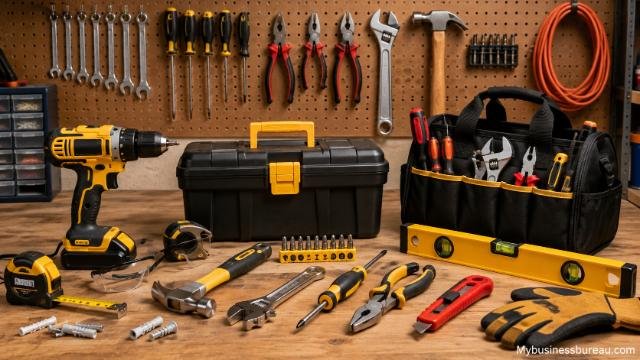
Build a tool collection around the services you actually intend to sell. Essential equipment commonly includes screwdrivers, pliers, adjustable wrenches, hammers, measuring tools, levels, utility knives, drills, drivers, drill bits, saws, ladders, extension cords, and appropriate personal protective equipment.
Organize tools so that common items are immediately accessible. Toolboxes, modular storage systems, labeled containers, and vehicle shelving reduce the time spent searching for equipment. Carrying frequently used fasteners and consumable supplies can also prevent unnecessary trips to stores during straightforward jobs.
Avoid purchasing every specialized tool at the beginning. Expensive equipment should ideally have a clear connection to revenue. A tool that reduces job time, enables a profitable service, or is used repeatedly may justify its cost. Equipment needed only occasionally may be rented until demand becomes consistent enough to support ownership.
Set Handyman Prices for Sustainable Profit
Set prices that cover labor, operating expenses, non-billable time, business risk, and profit. Handyman businesses commonly use hourly rates, minimum service charges, fixed project prices, or combinations of these methods. The right model depends on how predictable the job is.
Hourly pricing can work well when the exact scope is uncertain. Fixed pricing can be effective for standardized jobs where labor and materials can be estimated accurately. A minimum service charge can protect profitability on small projects because even a short repair requires travel, scheduling, communication, invoicing, and vehicle expenses.
Avoid setting prices solely by copying competitors. Two businesses can have very different insurance costs, experience levels, travel distances, equipment investments, and productivity. Calculate the true cost of providing each service and establish a margin that supports long-term operation.
| Pricing Method | Best Application | Main Consideration |
| Hourly rate | Uncertain repair scope | Track labor accurately |
| Fixed price | Predictable projects | Estimate time carefully |
| Minimum charge | Small service calls | Covers travel and overhead |
| Day rate | Multiple tasks at one property | Define working hours |
| Recurring fee | Property maintenance | Specify included services |
Build a Professional Handyman Brand
Create a consistent brand that communicates reliability and practical expertise. A business name, simple logo, recognizable colors, professional phone number, business email address, and clean workwear can make a small operation appear organized and established.
Branding should extend beyond appearance. Customers judge a handyman by punctuality, communication, cleanliness, workmanship, and the way unexpected problems are handled. Confirming appointments, explaining delays, protecting floors and furniture, and cleaning the work area can influence customer satisfaction as much as technical ability.
Photographs can demonstrate the quality of completed projects. With customer permission, take clear before-and-after images of repairs, installations, painting, carpentry, and improvement projects. A portfolio gives potential customers evidence of capability and provides useful material for websites, business listings, and social media.
Establish an Effective Online Presence
Create a website or professional online profile that clearly states services, service areas, contact methods, operating hours, and the types of customers served. Customers searching for a handyman usually want quick confirmation that someone can perform a particular task in their location.
Individual service information can improve both usability and search visibility. Instead of simply stating “home repairs,” explain specific offerings such as drywall repair, door repair, shelf installation, furniture assembly, painting, and rental property maintenance. Clear descriptions help potential customers determine whether the business matches their needs.
Maintain accurate business information across online directories and profiles. Consistent names, phone numbers, service details, and operating hours reduce confusion. Customer reviews can also strengthen visibility and trust, especially when reviews describe specific completed services and positive experiences.
Generate Consistent Handyman Leads
Use several customer acquisition channels instead of depending on one source. Local search visibility, referrals, neighborhood groups, business directories, social platforms, partnerships, signs, and targeted advertising can all contribute leads.
Referral relationships can be especially valuable. Real estate agents, landlords, property managers, cleaners, painters, flooring installers, and other service professionals frequently encounter customers who need additional repairs. Reliable referral partners can create a steady pipeline without requiring continuous advertising expenditure.
Track where every customer comes from. Ask new clients how they found the business and record the answer. Over time, compare each marketing channel by number of inquiries, booked jobs, revenue, and customer quality. Invest more heavily in channels that produce profitable work rather than measuring marketing success only by clicks or inquiries.
Deliver a Reliable Customer Experience
Respond to inquiries professionally and collect enough information to understand the requested work. Ask for the property location, job description, relevant measurements, photographs when useful, desired timing, and any known complications. Better information improves scheduling and estimating.
Set expectations before arriving. Customers should understand the appointment window, pricing method, payment expectations, and whether materials are included. For larger jobs, written estimates should define the scope so both parties understand what is and is not included.
After completing the work, inspect the result and confirm that the agreed tasks have been addressed. Provide an invoice that clearly describes services and charges. A short follow-up can encourage reviews, referrals, and repeat bookings while demonstrating that the business values long-term customer relationships.
Manage Scheduling and Daily Operations
Organize appointments geographically whenever possible. Scheduling several jobs in the same area reduces fuel costs and unproductive driving time. Allow sufficient space between appointments for delays, material purchases, traffic, and jobs that take longer than expected.
Use a calendar, scheduling application, invoicing platform, or customer management system to record appointments and customer details. Store estimates, invoices, photographs, job notes, and payment records in an organized system. Good documentation becomes increasingly important as the customer base grows.
Monitor key numbers each month, including inquiries, estimates, booked jobs, average job value, revenue, expenses, repeat customers, and unpaid invoices. These figures reveal whether the business is improving financially or simply becoming busier.
Increase Revenue Through Repeat Customers
Encourage repeat business by becoming the customer’s dependable contact for ongoing property maintenance. A client who initially hires a handyman to repair a door may later need painting, shelving, fixture installation, furniture assembly, or seasonal maintenance.
Property owners with multiple maintenance needs can be particularly valuable. Landlords and property managers may require repairs between tenants, routine inspections, hardware replacement, wall repairs, touch-up painting, and general maintenance. Reliable completion and clear documentation can turn occasional jobs into recurring work.
Maintain customer records so previous clients can be contacted appropriately when relevant services become available. Long-term customers typically require less marketing effort than continuously acquiring new clients, making retention an important contributor to profitability.
Expand the Handyman Business Carefully
Expand only after the existing operation has consistent demand and dependable processes. Signs that growth may be appropriate include a full schedule, frequent rejected jobs, strong repeat business, stable cash flow, and more work than one person can complete efficiently.
Growth can involve hiring technicians, adding administrative support, expanding the service area, or introducing complementary services. Each option creates additional costs and management responsibilities. Employees require scheduling, training, supervision, payroll management, equipment, and quality control.
Document operating procedures before expanding. Establish standards for customer communication, estimates, job photographs, material purchases, workmanship, cleanup, invoicing, and complaint resolution. Standardized processes help maintain service quality as work moves beyond the direct control of the owner.
Conclusion
A profitable handyman business combines practical ability with disciplined business management. Successful owners choose services strategically, understand local demand, comply with licensing requirements, price work sustainably, maintain suitable tools, market consistently, and deliver reliable customer experiences. Strong scheduling, financial tracking, written estimates, professional communication, and repeat-customer strategies turn individual repair jobs into a sustainable operation.
Growth should follow proven demand rather than precede it. When a handyman business develops a strong local reputation, maintains healthy margins, and creates dependable operating systems, it can progress from a small owner-operated service into a valuable property maintenance company with recurring customers and long-term revenue opportunities.
FAQ’s
A handyman business can be profitable when prices cover labor, travel, materials, insurance, administration, equipment, taxes, and a suitable profit margin. Profitability also depends on maintaining enough billable work and minimizing unnecessary travel and downtime.
Startup costs depend on existing tools, transportation, licensing, insurance, marketing, and the services offered. Someone who already owns a suitable vehicle and essential tools may require considerably less startup capital than a business purchasing everything from scratch.
Licensing requirements depend on location and the work performed. General repairs may be permitted under different rules from electrical, plumbing, HVAC, structural, or major construction work. Business owners should confirm requirements with the relevant local authorities before accepting projects.
A handyman can use hourly pricing, fixed project pricing, minimum service charges, day rates, or recurring maintenance fees. The pricing method should account for labor, travel, materials, overhead, non-billable time, risk, and desired profit.
A handyman business can attract customers through local search visibility, customer reviews, referrals, neighborhood marketing, professional partnerships, online directories, social platforms, and advertising. Tracking the source of each booked job helps identify the most profitable marketing channels.
Growth typically comes from increasing repeat business, raising average job value, improving scheduling efficiency, developing referral relationships, adding profitable services, and eventually hiring additional workers when demand supports the extra cost. Expansion works best after pricing, customer service, and operational processes have already been standardized.


