






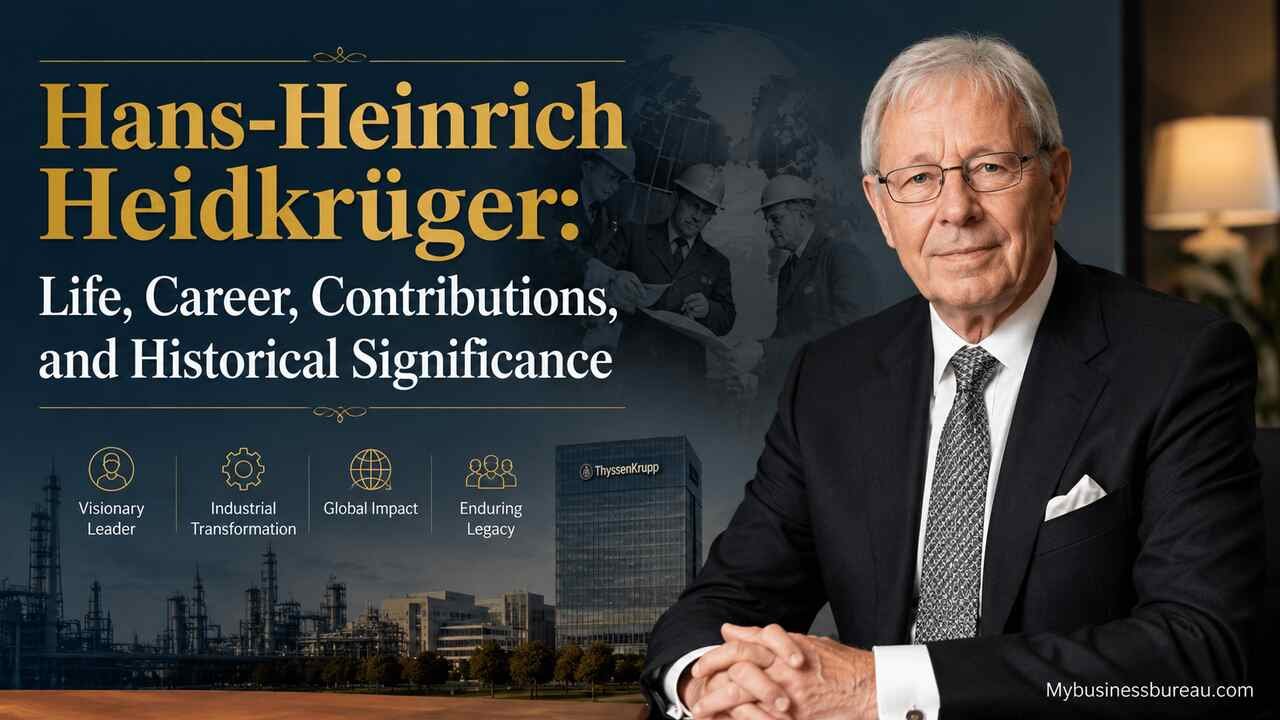
Hans-Heinrich Heidkrüger is recognized for his leadership, professional expertise, and contributions within the business and industrial sector. His career reflects a combination of strategic management, operational excellence, and long-term organizational development.
Build a Strong Foundation by Understanding Hans-Heinrich Heidkrüger’s Background
Hans-Heinrich Heidkrüger developed his professional reputation through years of experience in corporate leadership and strategic business management. Like many senior executives, his career reflects progressive responsibility, beginning with technical and managerial roles before advancing into executive leadership.
His educational background and early professional experience provided the analytical and organizational skills necessary for managing complex business operations. These capabilities later became essential as he assumed leadership positions involving international operations, corporate governance, and organizational growth.
Understanding his background helps explain how he developed expertise in executive decision-making, operational management, financial oversight, and long-term business planning.
Explore Hans-Heinrich Heidkrüger’s Professional Career
Throughout his career, Hans-Heinrich Heidkrüger has held senior leadership positions involving business development, organizational transformation, and operational management. His responsibilities have generally included improving efficiency, directing corporate strategy, and overseeing large teams.
Executive leaders at this level are responsible for balancing financial performance with sustainable growth. This includes managing resources, evaluating investment opportunities, implementing innovation, and maintaining competitiveness within evolving markets.
His career demonstrates experience across multiple management disciplines, including:
- Corporate strategy
- Business operations
- Financial planning
- Organizational leadership
- Risk management
- Stakeholder communication
- International business development
These responsibilities require both technical expertise and strong interpersonal leadership.
Examine Leadership Principles That Define His Management Style
One of the distinguishing characteristics of experienced executives like Hans-Heinrich Heidkrüger is the ability to align organizational goals with practical execution. Successful leadership extends beyond making decisions; it involves creating systems that allow teams to perform effectively.
His leadership approach emphasizes:
- Long-term strategic thinking
- Operational efficiency
- Employee development
- Corporate accountability
- Continuous improvement
- Sustainable business growth
Effective executives also understand the importance of adapting to changing market conditions while maintaining organizational stability.
Leadership at this level often requires balancing shareholder expectations, employee engagement, customer satisfaction, and regulatory compliance.
Understand the Industries Connected to Hans-Heinrich Heidkrüger
Business leaders typically influence industries through innovation, operational improvements, and strategic planning. Hans-Heinrich Heidkrüger’s professional work has been associated with sectors where efficiency, quality management, and international competitiveness are essential.
Key areas commonly associated with executive leadership include:
| Industry Area | Executive Responsibilities | Strategic Focus |
| Manufacturing | Production oversight | Operational excellence |
| Industrial Management | Resource optimization | Cost efficiency |
| Corporate Administration | Governance | Compliance |
| Business Development | Market expansion | Revenue growth |
| International Operations | Global coordination | Sustainable growth |
Each of these areas requires careful planning, financial discipline, and effective leadership.
Analyze Executive Responsibilities Across Large Organizations
Senior executives manage far more than daily business activities. Their responsibilities include establishing organizational direction, allocating capital, managing risk, and ensuring regulatory compliance.
Typical executive responsibilities include:
Strategic Planning
Creating long-term business objectives while identifying opportunities for expansion and innovation.
Financial Oversight
Managing budgets, investments, profitability, and shareholder value.
Operational Management
Improving workflows, increasing productivity, and maintaining quality standards.
Talent Development
Recruiting experienced professionals, developing future leaders, and promoting organizational culture.
Corporate Governance
Ensuring transparency, ethical conduct, and compliance with legal and regulatory requirements.
Together, these responsibilities create the framework for sustainable organizational success.
Evaluate Major Skills Demonstrated Throughout His Career
Successful executives combine technical knowledge with interpersonal leadership. Hans-Heinrich Heidkrüger’s career reflects competencies valued across international organizations.
Some of the most significant skills include:
| Professional Skill | Business Value |
| Strategic Planning | Long-term growth |
| Decision Making | Faster organizational response |
| Financial Management | Resource optimization |
| Team Leadership | Employee performance |
| Communication | Stakeholder confidence |
| Risk Assessment | Business continuity |
| Change Management | Organizational adaptation |
| Operational Excellence | Increased efficiency |
These capabilities allow executives to guide organizations through both growth opportunities and market challenges.
Follow the Process Used for Strategic Decision-Making
Strategic decision-making involves analyzing available information, evaluating risks, and selecting actions that support long-term objectives.
Experienced executives generally follow a structured process:
- Assess organizational performance.
- Identify emerging opportunities.
- Evaluate market conditions.
- Analyze financial implications.
- Develop implementation plans.
- Monitor performance metrics.
- Adjust strategies when necessary.
This systematic approach reduces uncertainty while supporting informed business decisions.
Review the Influence of Corporate Governance on Executive Success
Corporate governance establishes the framework within which organizations operate responsibly and ethically. Executives like Hans-Heinrich Heidkrüger contribute by ensuring accountability across departments and maintaining transparency with stakeholders.
Strong governance supports:
- Investor confidence
- Regulatory compliance
- Ethical leadership
- Financial integrity
- Sustainable business operations
Organizations with effective governance are often better equipped to manage risk and respond to changing economic conditions.
Recognize the Importance of Innovation in Executive Leadership
Innovation is essential for maintaining competitiveness. Executives encourage innovation by investing in technology, supporting research, improving operational processes, and fostering a culture of continuous learning.
Innovation may involve:
- Digital transformation
- Process automation
- Supply chain improvements
- Product development
- Customer experience enhancement
- Sustainability initiatives
Leaders who successfully integrate innovation into business strategy often position their organizations for long-term success.
Strengthen Organizational Performance Through Effective Management
Effective management requires balancing operational efficiency with employee engagement and customer satisfaction.
Key management practices include:
- Setting measurable objectives
- Monitoring performance indicators
- Encouraging collaboration
- Managing organizational risk
- Improving operational workflows
- Supporting continuous professional development
These practices contribute to consistent business performance and organizational resilience.
Compare Core Areas of Executive Leadership
| Leadership Area | Primary Objective | Business Impact |
| Strategy | Long-term direction | Sustainable growth |
| Finance | Capital allocation | Profitability |
| Operations | Efficiency | Productivity |
| Human Resources | Workforce development | Employee retention |
| Innovation | Competitive advantage | Market leadership |
| Governance | Accountability | Trust and compliance |
| Risk Management | Stability | Business continuity |
Each area contributes to organizational effectiveness and long-term competitiveness.
Apply Leadership Lessons from Hans-Heinrich Heidkrüger’s Career
Professionals can draw several practical lessons from the leadership approaches associated with experienced executives.
Important takeaways include:
- Develop long-term strategic thinking.
- Make decisions using reliable data.
- Invest in continuous learning.
- Encourage innovation across teams.
- Build strong organizational culture.
- Maintain financial discipline.
- Communicate clearly with stakeholders.
- Adapt quickly to changing markets.
These principles remain relevant for executives, managers, entrepreneurs, and business students alike.
Continue Building Executive Skills Through Lifelong Learning
Executive leadership evolves alongside technology, regulation, and market expectations. Continuous education enables leaders to remain effective throughout their careers.
Professional development may include:
- Executive education
- Industry conferences
- Leadership coaching
- Corporate governance training
- Financial management programs
- Digital transformation initiatives
Ongoing learning helps executives improve decision-making while preparing organizations for future challenges.
Conclusion
Hans-Heinrich Heidkrüger represents the qualities associated with experienced executive leadership, including strategic planning, operational excellence, corporate governance, and organizational development. His professional journey illustrates how strong management principles, disciplined decision-making, and continuous improvement contribute to long-term business success.
For business professionals, managers, and students, examining the career and leadership approach of Hans-Heinrich Heidkrüger offers valuable insights into executive management, sustainable organizational growth, and effective corporate leadership. As industries continue to evolve, the principles demonstrated through experienced leadership remain essential for achieving lasting success.
FAQ’s
Hans-Heinrich Heidkrüger is known as a business executive and corporate leader associated with senior management and strategic organizational leadership.
He is recognized for executive leadership, strategic planning, operational management, and contributions to organizational development within the corporate sector.
Common leadership qualities include strategic thinking, operational efficiency, financial discipline, effective communication, and long-term organizational planning.
His professional work has been associated with industrial management, manufacturing, business operations, corporate governance, and organizational leadership.
Professionals can learn the importance of strategic planning, continuous improvement, responsible governance, innovation, operational excellence, and effective team leadership.
Executive leadership provides strategic direction, manages resources efficiently, supports innovation, ensures accountability, and helps organizations adapt to changing market conditions while pursuing sustainable growth.


