



Building business credit is essential for accessing better financing, improved supplier terms, and long-term financial stability. Business credit cards help establish this credit by reporting payment history and credit usage to commercial credit bureaus.
Register Your Business Before Applying for Credit Cards
The first step in building business credit is creating a legally recognized business structure. Credit card issuers and commercial credit bureaus evaluate whether a business exists as a legitimate operating entity before generating a business credit profile.
A sole proprietorship may qualify for some business credit products, but corporations and limited liability companies usually create stronger credibility with lenders. Registering the business with the appropriate government authority establishes a legal identity that separates company liabilities from personal finances. Businesses should also obtain an Employer Identification Number (EIN) from the Internal Revenue Service or the relevant tax authority in their country.
Several foundational elements strengthen the company’s financial identity:
| Business Requirement | Purpose | Impact on Business Credit |
| Business Registration | Establishes legal entity | Creates lender confidence |
| EIN or Tax ID | Identifies business for taxes | Allows credit reporting |
| Business Address | Confirms operational presence | Improves verification |
| Business Phone Number | Validates legitimacy | Helps underwriting |
| Business Bank Account | Separates finances | Supports financial consistency |
A professional business setup improves approval odds for credit cards because issuers evaluate operational legitimacy during underwriting. Businesses with matching legal documents, active banking records, and verifiable contact information typically experience smoother approval processes.
Open a Dedicated Business Bank Account

A dedicated business bank account creates financial separation between personal and company expenses. Credit card issuers often review banking history when evaluating applications, and consistent commercial transactions indicate operational stability.
Using a separate business account also improves accounting accuracy. Revenue deposits, vendor payments, payroll expenses, and credit card payments become easier to track when all transactions occur through commercial banking channels. This separation supports stronger bookkeeping practices and simplifies tax preparation.
Banks frequently use account activity to assess risk. Businesses with regular deposits and healthy balances may qualify for higher credit limits and better financial products over time. Some financial institutions also provide prequalified business credit card offers based on banking relationships.
Maintaining organized cash flow within a dedicated account demonstrates responsible financial management. Lenders and commercial credit agencies view consistent banking behavior as a positive signal when calculating business risk profiles.
Apply for Business Credit Cards That Report to Commercial Credit Bureaus
Not every business credit card contributes equally to business credit development. Some issuers report activity only to personal credit bureaus, while others report to major commercial agencies such as Dun & Bradstreet, Experian Business, and Equifax Business.
Selecting the right credit card is essential because reporting behavior directly influences business credit growth. Businesses should prioritize cards that consistently report payment history, balances, and account status to commercial bureaus.
Major business credit card issuers commonly include:
- American Express
- Capital One
- Chase
- Bank of America
- Wells Fargo
Different cards serve different business goals. Some prioritize cashback rewards, while others offer travel benefits, introductory financing periods, or expense management tools.
| Credit Card Feature | Benefit for Businesses | Credit-Building Value |
| Commercial Bureau Reporting | Builds business credit profile | High |
| Employee Cards | Expands spending control | Medium |
| Cashback Rewards | Reduces operational costs | Low |
| Spending Analytics | Improves budgeting | Medium |
| Higher Credit Limits | Supports utilization management | High |
Businesses with limited history may begin with secured business credit cards. These cards require a refundable deposit but often provide easier approval standards. Over time, responsible usage may qualify the business for unsecured credit products with larger limits.
Use Business Credit Cards for Operational Expenses
Credit-building activity depends on consistent card usage. A business credit card that remains inactive generates minimal payment history, which slows profile development.
Operational expenses create ideal opportunities for recurring activity. Companies can use business credit cards for:
- Inventory purchases
- Software subscriptions
- Advertising campaigns
- Office supplies
- Fuel expenses
- Shipping services
- Utility payments
- Travel expenses
Using the card for predictable operational spending establishes ongoing reporting activity while helping businesses manage short-term liquidity. Monthly transactions create a record of commercial behavior that lenders evaluate when assessing repayment reliability.
Businesses should avoid unnecessary purchases solely to generate activity. Strategic usage focuses on expenses already required for operations. Responsible spending demonstrates financial discipline while maintaining healthy cash flow.
Recurring payments also simplify budgeting because many issuers provide expense categorization tools and downloadable financial reports. These systems improve operational visibility and support long-term financial planning.
Keep Credit Utilization Low Across All Accounts
Credit utilization measures how much available credit a business uses relative to its total limits. This ratio strongly affects commercial credit scores because high utilization may indicate financial stress or overreliance on borrowed funds.
For example, a business with a $20,000 limit and a $15,000 balance has a 75% utilization ratio. Commercial lenders generally prefer lower ratios because they indicate controlled borrowing behavior.
Most financial experts recommend keeping utilization below 30%. Lower ratios often produce stronger credit outcomes and better financing opportunities.
Several strategies help maintain low utilization:
- Make multiple payments each month
- Request periodic credit limit increases
- Spread spending across multiple cards
- Avoid maxing out accounts
- Pay balances before statement closing dates
Businesses with seasonal revenue fluctuations should monitor utilization carefully during high-expense periods. Temporary balance spikes can negatively affect commercial credit scores if they remain elevated when issuers report account data.
Strong utilization management signals financial stability and improves lender confidence.
Pay Credit Card Balances on Time Every Month
Payment history is the most influential factor in both personal and business credit scoring systems. Even a single late payment can damage a business credit profile and reduce financing opportunities.
Timely payments demonstrate reliability and responsible debt management. Credit card issuers report payment behavior to commercial bureaus, which use this data to calculate business risk ratings.
Automatic payments reduce the risk of missed due dates. Businesses should configure reminders or autopay systems for at least minimum required amounts. Companies with strong cash flow may choose to pay balances in full each month to avoid interest expenses.
Consistent on-time payments generate several long-term advantages:
- Improved commercial credit scores
- Better loan qualification odds
- Higher credit limits
- Lower financing costs
- Increased supplier confidence
Payment timing also affects vendor relationships. Businesses that consistently meet obligations build stronger reputational credibility across lenders, suppliers, and financial institutions.
Monitor Business Credit Reports Regularly
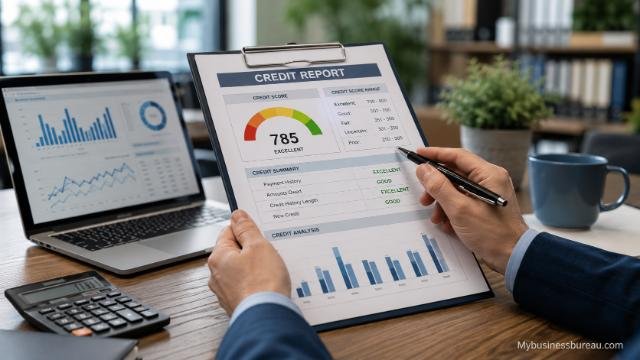
Monitoring business credit reports helps companies identify inaccuracies, fraud, and score fluctuations before they create larger financial problems. Commercial credit bureaus maintain detailed records of payment history, account balances, public filings, and borrowing activity.
Major commercial credit reporting agencies include:
- Dun & Bradstreet
- Experian
- Equifax
Businesses should review reports regularly to confirm that all accounts report accurately. Incorrect late payments, duplicate accounts, or outdated balances may lower credit scores unfairly.
Monitoring also helps businesses measure progress over time. Improvements in payment consistency, utilization ratios, and account age often contribute to stronger commercial ratings.
Some issuers provide free business credit monitoring tools through online dashboards. Third-party monitoring services may also offer alerts for score changes, inquiries, or suspicious activity.
Accurate reporting strengthens financing opportunities because lenders rely heavily on commercial bureau data during underwriting decisions.
Increase Credit Limits Responsibly
Higher credit limits can improve utilization ratios and strengthen borrowing flexibility. Businesses that consistently pay on time and maintain stable revenue may qualify for periodic credit line increases from issuers.
Credit limit increases create two major advantages. First, they reduce overall utilization percentages when spending remains stable. Second, they provide greater emergency liquidity during temporary cash flow disruptions.
Businesses should request increases strategically rather than frequently. Excessive requests may create lender concerns regarding borrowing pressure. Strong candidates for increases usually demonstrate:
- Consistent payment history
- Stable revenue growth
- Responsible utilization management
- Long-term account activity
- Minimal delinquencies
Companies should avoid dramatically increasing spending simply because additional credit becomes available. Higher limits are most beneficial when they improve financial flexibility without encouraging unnecessary debt accumulation.
Responsible expansion of credit capacity strengthens long-term business financing options.
Diversify Credit Relationships Across Multiple Accounts
Businesses that rely on only one credit card may limit the depth of their credit profile. Multiple well-managed accounts create broader financial history and demonstrate the ability to handle different credit relationships responsibly.
Diversification may include:
- Cashback business cards
- Travel reward business cards
- Vendor credit accounts
- Fuel cards
- Store credit accounts
- Business lines of credit
Each account contributes unique payment history and utilization data. A diversified profile often appears more stable to lenders because it demonstrates broader borrowing experience.
However, businesses should avoid opening too many accounts within a short timeframe. Excessive applications may trigger multiple hard inquiries and temporarily reduce approval odds.
Strategic diversification focuses on financial utility rather than account quantity. Businesses should open accounts that support operational needs while contributing positively to credit development.
Separate Personal and Business Credit Usage
Many entrepreneurs initially use personal credit cards for business expenses. While this approach may seem convenient, it creates financial overlap that complicates accounting and weakens commercial credit-building efforts.
Dedicated business credit cards establish independent reporting activity tied to the company rather than the owner’s personal profile. This separation protects personal utilization ratios and creates clearer financial records.
Businesses benefit from separation in several ways:
| Financial Area | Personal Credit Usage | Business Credit Usage |
| Expense Tracking | Difficult | Organized |
| Tax Preparation | Complicated | Simplified |
| Liability Protection | Limited | Stronger |
| Credit Building | Personal only | Commercial profile |
| Financing Credibility | Lower | Higher |
Lenders often evaluate whether a business maintains independent financial operations. Companies with fully separated banking and credit systems generally appear more professional and financially mature.
As the company grows, maintaining separation becomes increasingly important for audits, investor reviews, and financing applications.
Build Long-Term Credit History Through Consistency
Business credit growth does not happen instantly. Commercial credit profiles strengthen over time through repeated positive financial behavior.
Account age contributes to credit stability because older accounts demonstrate long-term reliability. Businesses should avoid closing well-established credit cards unless necessary, especially accounts with strong payment histories and favorable terms.
Consistency matters more than aggressive borrowing. Sustainable growth comes from:
- Regular card activity
- On-time payments
- Controlled utilization
- Stable financial management
- Responsible account expansion
Lenders prioritize predictable repayment patterns because they indicate lower risk. Businesses that demonstrate stability over several years often gain access to premium financing products with lower interest rates and higher borrowing capacity.
Long-term credit development also improves resilience during economic downturns. Companies with strong commercial credit profiles typically retain better financing access during periods of tighter lending standards.
Conclusion
Building business credit using credit cards requires strategic financial management, consistent payment behavior, and disciplined utilization practices. Businesses that establish legal structures, separate finances, select reporting credit cards, and maintain low balances create strong commercial credit foundations over time.
Credit cards serve as powerful tools for generating payment history, improving lender confidence, and increasing financing opportunities. When businesses use them responsibly for operational expenses and repay balances consistently, they strengthen commercial credit profiles that support future growth.
Strong business credit improves access to loans, vendor relationships, and expansion capital while reducing borrowing costs. Companies that approach credit-building with patience and consistency position themselves for greater financial flexibility and long-term stability.
Visit mybusinessbureau.com for expert business insights and smart growth strategies.
FAQ’s
Most businesses begin establishing credit activity within a few months, but strong commercial credit profiles usually require consistent usage and on-time payments over one to three years.
Yes, although many issuers initially evaluate the owner’s personal credit during applications. Over time, strong business performance and payment history can help establish independent commercial credit.
No. Some issuers report only to personal credit bureaus, while others report to commercial agencies such as Dun & Bradstreet, Experian Business, and Equifax Business.
Most lenders prefer utilization below 30%. Lower ratios often indicate better financial management and may improve business credit scores.
Secured business credit cards are often useful for startups with limited credit history because approval standards are typically more flexible.
Yes. Late payments may remain on commercial credit reports for years and can reduce financing opportunities, increase borrowing costs, and lower lender confidence.
