


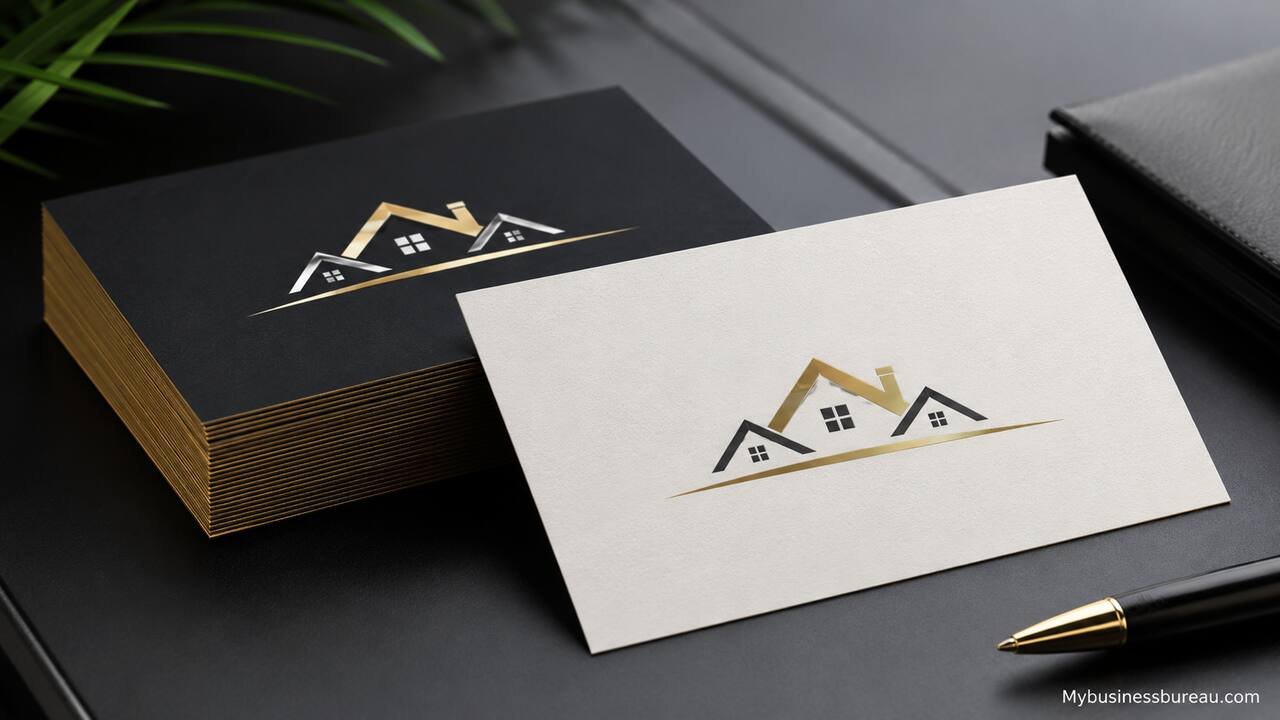
Real estate business cards are a powerful offline marketing tool that helps agents and property professionals make a strong first impression. Beyond sharing contact details, they strengthen personal branding, build trust, and encourage potential clients to connect, leading to valuable relationships and future business.
Define Your Real Estate Brand Before Designing the Card

Every successful real estate business card starts with a clear brand identity. Your card should instantly communicate who you are, what type of properties you specialize in, and how clients can contact you.
Before selecting colors or layouts, determine your professional image. Luxury agents often choose minimalist designs with premium finishes, while residential agents may prefer approachable colors and welcoming typography. Commercial brokers frequently use modern layouts with clean lines to convey professionalism.
Your branding should remain consistent across every marketing channel, including your website, social media profiles, property brochures, signage, email signature, and business cards. Consistency builds recognition and trust among potential clients.
Core Branding Elements
| Branding Element | Purpose | Best Practice |
| Logo | Builds recognition | Use a high-resolution version |
| Brand Colors | Creates consistency | Limit to 2–3 colors |
| Typography | Improves readability | Choose clean professional fonts |
| Headshot | Builds trust | Use a recent professional photo |
| Tagline | Highlights expertise | Keep under 10 words |
| Brokerage Branding | Meets compliance | Follow brokerage guidelines |
Include Essential Contact Information Clearly
A business card should make contacting you effortless. Every piece of information must have a purpose.
Include your full name, professional title, brokerage name, phone number, email address, website, and office address if appropriate. Many modern real estate cards also include a QR code that directs prospects to property listings, scheduling pages, or digital business cards.
Avoid overcrowding the design. White space improves readability and gives the card a premium appearance.
Essential information includes:
- Full name
- Professional title
- Brokerage
- Mobile phone
- Email address
- Website
- License number where required
- Social media handles
- QR code
- Office location
Every detail should remain accurate and easy to read using a font size that balances elegance with accessibility.
Choose a Layout That Matches Your Market
The layout determines how quickly recipients absorb your information.
A vertical business card often appears modern and memorable, while traditional horizontal cards fit easily into wallets and card holders. Folded cards provide extra room for property specialties, testimonials, or service areas without appearing cluttered.
Luxury real estate professionals frequently use minimal layouts with abundant white space. Agents working in family-oriented neighborhoods may benefit from warmer colors and friendlier design elements.
Popular layout choices include:
| Layout Style | Best For | Advantages |
| Horizontal | Most agents | Familiar and professional |
| Vertical | Modern branding | Stands out visually |
| Folded | Multiple services | Extra information space |
| Square | Creative branding | Unique appearance |
| Rounded Corners | Premium feel | Softer visual appeal |
A layout should guide the eye naturally from your name to your contact information and then toward your call to action.
Select Premium Materials That Reflect Professionalism
The material of your business card influences how people perceive your brand.
Standard cardstock is economical and effective, but premium finishes can significantly improve perceived quality. Thick cardstock feels durable and substantial, leaving a stronger impression.
Matte finishes reduce glare and create a sophisticated appearance. Gloss coatings enhance vibrant property images and colorful branding. Soft-touch coatings provide a luxurious texture that recipients often remember.
Additional premium options include:
- Spot UV coating
- Foil stamping
- Raised lettering
- Embossing
- Debossing
- Linen texture
- Metallic finish
- Recycled cardstock
- Cotton paper
- Plastic business cards
Choosing materials that align with your market position reinforces your professional image during every client interaction.
Add High-Quality Images Without Overcrowding the Design
Visual elements help real estate business cards stand out, but balance remains essential.
A professional headshot helps prospects remember you after networking events or open houses. Some agents include a high-quality property image to reinforce their market specialization, particularly in luxury or waterfront real estate.
Avoid low-resolution images that reduce credibility. Every photograph should be professionally edited and printed using high-quality production methods.
Good image placement includes:
- Professional portrait
- Luxury home exterior
- Skyline photograph
- Neighborhood landmark
- Brokerage logo
- Custom icons
- QR code graphic
Each image should support your branding rather than distract from your contact details.
Write a Strong Value Statement
A business card should communicate more than your name. It should explain why clients should choose you.
Instead of generic titles, include a concise statement highlighting your specialization.
Examples include:
- Luxury Home Specialist
- First-Time Buyer Expert
- Commercial Property Advisor
- Waterfront Property Consultant
- Investment Property Specialist
- Relocation Expert
- Local Market Professional
Short statements help prospects remember your expertise long after they receive your card.
Incorporate Digital Features That Increase Engagement
Modern business cards connect print marketing with digital marketing.
QR codes have become one of the most valuable additions because they eliminate manual typing and immediately direct prospects to useful resources.
Potential QR code destinations include:
- Property listings
- Scheduling calendar
- Google Reviews
- Digital business card
- Personal website
- Instagram profile
- Virtual property tours
- YouTube channel
Dynamic QR codes allow updates without reprinting cards, making them especially useful for active real estate professionals.
Follow Local Licensing and Brokerage Requirements
Real estate professionals often operate under legal and brokerage branding requirements.
Many jurisdictions require license numbers, brokerage names, equal housing logos, or specific disclosures on marketing materials. Before printing thousands of cards, verify compliance with local regulations and brokerage policies.
Your brokerage may also require approved logo placement, brand colors, or minimum font sizes.
Maintaining compliance protects your reputation while presenting a polished and trustworthy image.
Print Cards Using Professional Printing Standards
Printing quality directly affects first impressions.
Cheap printing can result in faded colors, blurry logos, and inconsistent cutting. Professional printing companies offer superior color calibration, thicker cardstock, and durable finishes.
Request printed proofs before placing large orders. Evaluate color accuracy, alignment, text clarity, and material quality under different lighting conditions.
Important printing considerations include:
| Printing Feature | Recommendation |
| Card Thickness | 16 pt or higher |
| Color Mode | CMYK |
| Image Resolution | 300 DPI |
| Bleed Area | Standard print bleed |
| Finish | Matte or soft touch |
| Print Quantity | Based on networking needs |
Small production improvements often create a significantly stronger professional impression.
Distribute Business Cards Strategically to Generate Leads
Even the best-designed business card only works when people receive it.
Successful real estate professionals distribute cards consistently throughout their daily activities rather than waiting for networking events.
Effective distribution opportunities include:
- Open houses
- Property showings
- Community events
- Chamber of Commerce meetings
- Mortgage lenders
- Home inspectors
- Interior designers
- Moving companies
- Coffee meetings
- Local business partnerships
Every interaction becomes an opportunity to build awareness and generate future referrals.
Instead of simply handing someone your card, engage in meaningful conversation first. Personal interaction increases the likelihood that recipients will remember both you and your services.
Update Your Business Cards as Your Business Evolves
Your business card should evolve alongside your career.
Changes in brokerage affiliation, certifications, contact information, branding, or specialization require updated cards. Outdated information creates confusion and may result in lost business opportunities.
Review your card at least annually to ensure it reflects your current services, marketing strategy, and professional accomplishments. If you earn new designations, expand into luxury properties, or begin serving additional markets, incorporate those updates into the next print run.
Keeping your cards current demonstrates professionalism and ensures every networking opportunity supports your latest business goals.
Conclusion
Real estate business cards remain an essential marketing asset because they combine personal interaction with lasting brand visibility. A thoughtfully designed card communicates professionalism, builds trust, and makes it easy for prospective clients to contact you when they are ready to buy, sell, or invest in property.
By defining your brand, presenting clear contact information, selecting premium materials, incorporating digital features such as QR codes, maintaining compliance with licensing requirements, and distributing cards strategically, you transform a simple printed card into a powerful lead generation tool. Investing in quality design and printing ensures your business card continues to represent your expertise long after the initial meeting.
FAQ’s
Every card should include your full name, professional title, brokerage name, phone number, email address, website, logo, and a QR code if possible. Include any legally required licensing information based on your location.
Yes. A professional headshot helps people remember you after networking events, open houses, and client meetings. Use a high-resolution, professionally taken image that matches your personal brand.
Matte and soft-touch finishes are popular because they create a sophisticated appearance, reduce glare, and feel premium. Luxury agents often choose thicker cardstock combined with foil or spot UV accents for additional impact.
Yes. QR codes provide instant access to your website, property listings, appointment scheduler, digital contact card, reviews, or social media profiles, making it easier for prospects to connect with you.
Review your business card every year or whenever your brokerage, branding, contact information, certifications, or market specialization changes. Keeping information current prevents confusion and reinforces your professional image.
The most common size is 3.5 × 2 inches (89 × 51 mm). This standard size fits easily into wallets, business card holders, and networking organizers while remaining compatible with most professional printing services.
