






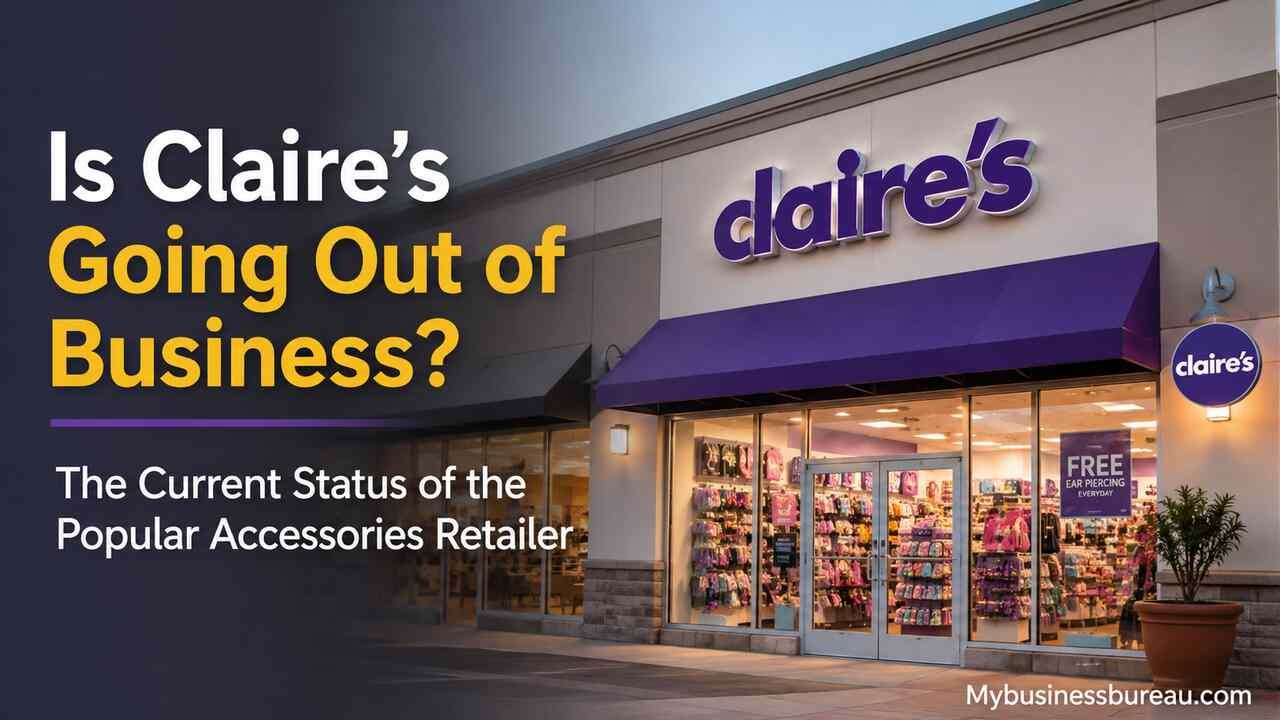
For years, Claire’s has been one of the most recognizable names in fashion accessories, ear piercing services, and teen-focused retail. As store closures, bankruptcy filings, and restructuring announcements have made headlines, many shoppers are asking a simple question: Is Claire’s going out of business?
The short answer is that Claire’s has faced significant financial difficulties, including a second Chapter 11 bankruptcy filing in 2025. However, the brand itself has not completely disappeared. Some operations have been sold, many stores have closed, and the company continues to undergo restructuring in different regions. The future of Claire’s depends on the success of those restructuring efforts and the performance of its remaining retail operations.
Review Claire’s Financial Situation
The most important development in Claire’s recent history was its Chapter 11 bankruptcy filing in the United States during 2025. The retailer cited increasing competition, changing shopping habits, debt obligations, and broader economic challenges as major factors behind the filing. Company leadership described the bankruptcy process as a way to explore strategic alternatives and preserve value where possible.
This was not the company’s first restructuring effort. Claire’s previously filed for bankruptcy in 2018, eliminated a substantial amount of debt, and later returned to profitability. Despite that recovery, the company struggled again as consumer behavior shifted further toward online shopping and social commerce platforms.
The situation illustrates a broader trend affecting mall-based retailers. Many brands that once depended heavily on shopping mall traffic have experienced declining foot traffic and increasing competition from e-commerce businesses. Claire’s has been attempting to adapt, but those efforts have not fully offset the financial pressures facing the company.
Examine Recent Bankruptcy Proceedings
The 2025 bankruptcy filing marked a critical turning point for the company. Court documents showed significant debt obligations, while management sought buyers and investors willing to support portions of the business. During the proceedings, Claire’s continued operating many stores while evaluating restructuring options.
One of the primary goals of Chapter 11 protection was to allow the retailer to continue serving customers while negotiating with creditors. Unlike a liquidation, Chapter 11 can provide an opportunity to reorganize operations and preserve valuable assets.
The bankruptcy process also highlighted the challenges facing specialty retailers. Rising operating expenses, import costs, and shifts in consumer spending created conditions that made recovery increasingly difficult. Those factors contributed to the need for another restructuring effort only a few years after the company’s previous bankruptcy.
Key Events Timeline
| Year | Event |
| 2018 | Claire’s filed for Chapter 11 bankruptcy and restructured debt |
| 2021–2022 | Revenue improved and the company explored growth opportunities |
| 2023 | IPO plans were postponed |
| 2025 | Second Chapter 11 bankruptcy filing occurred |
| 2025 | North American business sale process began |
| 2026 | Additional restructuring and regional store closures continued |
Track Store Closures Across Different Markets
Store closures have fueled much of the speculation surrounding Claire’s future. During the restructuring process, hundreds of locations were identified for closure as management attempted to reduce costs and focus on stronger-performing stores.
In North America, numerous stores were closed as part of the bankruptcy strategy. Some locations remained open while others entered liquidation. The exact number changed throughout the restructuring process as negotiations with buyers and investors evolved.
International operations experienced their own challenges. Several European markets underwent separate restructuring actions, with some regions facing administration proceedings and significant reductions in store counts.
Consumers often associate store closures with the end of a company. In reality, retailers frequently close underperforming locations while continuing operations elsewhere. That distinction is important when evaluating Claire’s long-term prospects.
Evaluate the Sale of North American Operations
A major development occurred when Claire’s reached an agreement to sell parts of its North American business to an investment firm. The transaction was designed to preserve a portion of the retailer’s footprint while supporting the restructuring process.
The buyer expressed an intention to maintain a meaningful retail presence across North America rather than eliminating the brand entirely. This indicated that stakeholders still saw value in the Claire’s name, customer base, and business model.
Although the sale did not save every store, it provided a pathway for portions of the business to continue operating. Such transactions are common in retail restructurings where investors believe a brand can remain viable under different ownership or management structures.
Analyze the Impact on Ear Piercing Services
One of Claire’s most distinctive offerings has always been ear piercing. Millions of customers have visited Claire’s locations specifically for piercing services, making it one of the company’s most recognizable business segments.
The continued demand for ear piercing creates an advantage that many competitors do not possess. Unlike general fashion accessories, piercing services require trained staff, specialized equipment, and customer trust. These factors help differentiate Claire’s from purely online retailers.
Even as stores close, ear piercing remains an important asset for the brand. Future owners or operators may continue emphasizing this service as a way to attract customers and generate recurring store traffic.
Major Business Areas Within Claire’s
| Business Segment | Role in Revenue and Brand Identity |
| Ear Piercing | Signature service attracting repeat customers |
| Fashion Jewelry | Core product category |
| Hair Accessories | Popular category among younger shoppers |
| Seasonal Merchandise | Supports holiday and event sales |
| Beauty Products | Expands customer spending opportunities |
Compare Claire’s Against Online Competition


Online retail has fundamentally changed the accessories market. Consumers now purchase jewelry, hair accessories, beauty products, and fashion items through numerous digital channels.
Platforms such as Amazon, social shopping networks, and fast-fashion retailers offer broad selections, rapid delivery, and competitive pricing. These advantages have made it harder for traditional mall-based stores to maintain market share.
Claire’s attempted to strengthen its digital presence through e-commerce initiatives and partnerships. While these efforts generated some success, they were not enough to overcome the combination of debt burdens and changing consumer behavior.
The challenge facing Claire’s is similar to that faced by many legacy retailers: maintaining relevance among younger consumers who increasingly discover products through social media rather than traditional shopping centers.
Assess the Future of the Claire’s Brand
Despite the difficulties, the Claire’s brand still possesses several strengths. It remains widely recognized among parents, teenagers, and young shoppers. Its association with first ear piercings creates emotional connections that many retailers cannot replicate.
Brand recognition can be a powerful asset during a restructuring. Investors often purchase distressed retailers because they believe the underlying brand still holds value, even if the current business structure is unsustainable.
Future growth may depend on a smaller store footprint, stronger digital integration, and a greater emphasis on experiential services. Rather than operating thousands of locations, Claire’s could potentially focus on high-performing stores and strategic partnerships.
The survival of the brand is therefore different from the survival of every individual store. Some locations may close permanently while the broader brand continues to exist under new ownership structures.
Monitor Regional Differences in Operations
Claire’s situation varies significantly by region. North American operations, European divisions, and other international markets have each followed different restructuring paths.
In the United Kingdom, for example, substantial store closures occurred following administration proceedings. Many standalone locations ceased operations, although efforts to preserve parts of the business continued through various rescue and acquisition discussions.
Other countries have experienced separate legal and financial processes based on local regulations and market conditions. This means that Claire’s may remain active in some markets while reducing or ending operations in others.
Consumers should therefore check local store information rather than assuming conditions are identical across all regions.
Follow Signs That Indicate Long-Term Recovery
Several indicators can help observers evaluate whether Claire’s is likely to stabilize in the future.
Store performance remains one of the most important measures. If remaining locations demonstrate strong sales and customer traffic, investors may become more confident about the brand’s future.
Digital growth is another critical factor. Retailers increasingly depend on e-commerce, mobile shopping, and social media engagement to reach younger consumers. Claire’s ability to compete in these areas will influence its long-term prospects.
Financial stability also matters. Reduced debt obligations, improved cash flow, and successful restructuring outcomes would significantly strengthen the company’s position.
Finally, continued demand for ear piercing services provides a competitive advantage that many online competitors cannot easily replicate.
Understand What Customers Should Expect
Customers can still find Claire’s products and services in many areas, although availability varies depending on location. Some stores remain operational, while others have closed permanently as part of restructuring efforts.
Gift cards, loyalty programs, and return policies may be affected during bankruptcy proceedings, so customers should verify current terms through official company channels. Store hours and inventory levels can also change during restructuring periods.
Those interested in ear piercing appointments or specific products should check availability directly through the company’s official website before visiting a location.
Conclusion
So, is Claire’s going out of business?
The answer is more nuanced than a simple yes or no. Claire’s has experienced serious financial challenges, including bankruptcy filings, widespread store closures, and significant restructuring efforts. However, the brand has not disappeared entirely. Portions of the business have been acquired, many locations have remained open, and investors continue to see value in the company’s name, customer relationships, and ear piercing services.
While some Claire’s stores have closed permanently, the broader brand continues to operate in various forms. The ultimate outcome will depend on how successfully the restructured business adapts to changing retail conditions and consumer preferences.
Visit mybusinessbureau.com for expert business insights and smart growth strategies.
FAQ’s
Not entirely. Many locations have closed, but parts of the business continue operating through restructuring and ownership changes.
Yes. Claire’s filed for Chapter 11 bankruptcy in 2018 and again in 2025.
Some stores remain open, while others have closed as part of restructuring efforts. Availability depends on the region.
The company has faced debt burdens, declining mall traffic, online competition, changing consumer behavior, and broader economic pressures.
Yes. Ear piercing remains one of the company’s signature services and continues to be a major part of the brand.
It is possible. The brand retains strong recognition, and investors have acquired portions of the business with plans to maintain a retail presence.


