






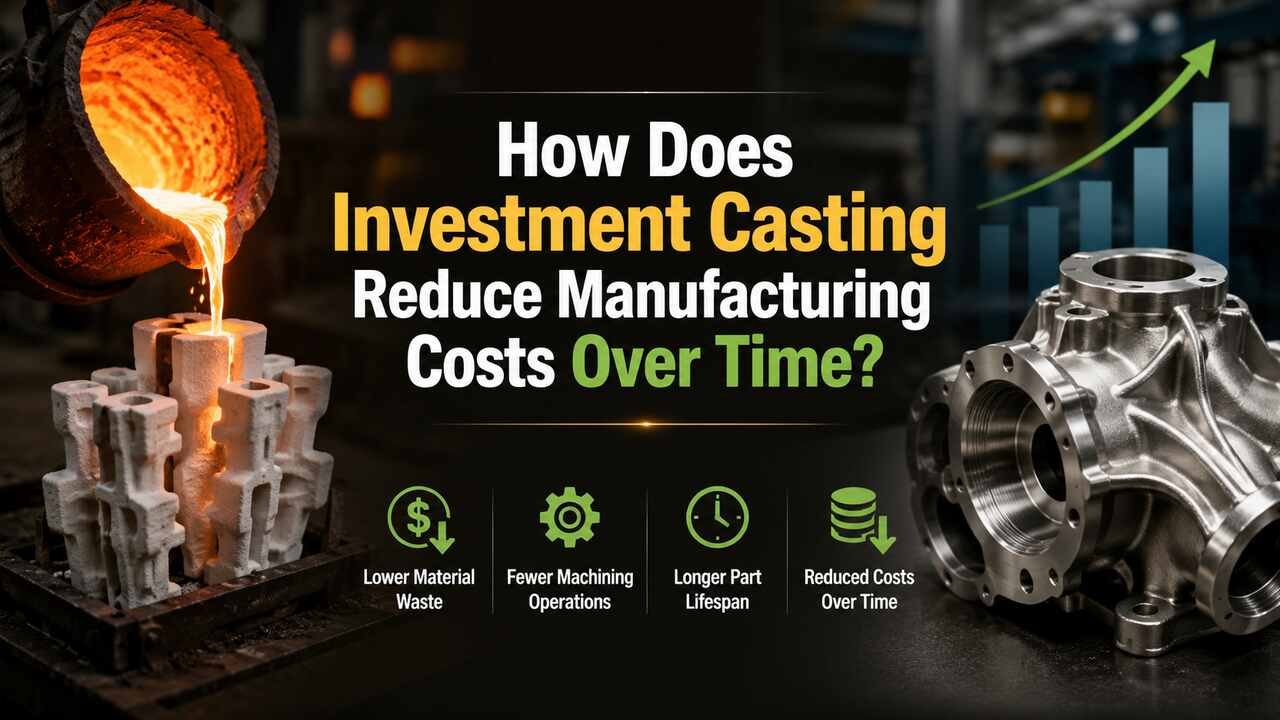
Introduction
Manufacturers are continually seeking ways to improve efficiency and control production costs without compromising product quality. As industries become more competitive, businesses need manufacturing processes that support precision, reduce waste, improve productivity, and deliver long-term value. This is one of the reasons investment casting continues to be widely used across industries such as aerospace, automotive, industrial engineering, energy, and heavy manufacturing.
Investment casting allows manufacturers to produce highly accurate components with complex geometries and excellent material consistency. By reducing unnecessary machining, minimising material waste, and improving production efficiency, the process helps lower manufacturing costs throughout the entire production lifecycle. Through advanced engineering expertise and precision manufacturing capabilities, companies such as Texmo Blank continue to support industrial businesses with investment casting solutions that improve both operational efficiency and long-term cost performance.
Reducing Secondary Machining Requirements
One of the most significant contributors to manufacturing costs is secondary machining.
Many conventional production methods require extensive cutting, drilling, grinding, or finishing before components reach their final dimensions. These additional processes increase labour requirements, extend production times, and consume valuable manufacturing resources.
Investment casting produces near-net-shape components that closely match the final design specifications.
Because parts are manufactured with excellent dimensional accuracy, the need for extensive secondary machining is significantly reduced.
This provides several operational advantages:
- Lower machining costs
- Shorter production cycles
- Reduced labor requirements
- Improved manufacturing efficiency
- Faster delivery schedules
Reducing unnecessary processing allows manufacturers to allocate resources more effectively while maintaining high product quality.
Improving Material Utilisation
Raw materials represent a significant proportion of overall manufacturing costs.
Traditional machining processes often remove large amounts of material to achieve final component dimensions, creating unnecessary waste and increasing production expenses.
Investment casting improves material utilisation by producing components that require minimal material removal after casting.
This supports:
- Lower raw material consumption
- Reduced scrap generation
- Improved production efficiency
- Better resource management
- Reduced manufacturing waste
These efficiencies become particularly valuable when working with high-performance alloys or specialised engineering materials where raw material costs are considerably higher.
Increasing Production Efficiency
Manufacturing efficiency directly influences overall production costs.
Processes that require fewer production stages allow manufacturers to complete projects more quickly while maintaining consistent quality standards.
Investment casting contributes to streamlined production by combining dimensional accuracy with repeatable manufacturing processes.
Manufacturers benefit from:
- Simplified production workflows
- Reduced production delays
- Faster assembly operations
- More predictable manufacturing schedules
- Higher overall productivity
Improved production efficiency allows businesses to increase output while controlling operational expenditure.
Reducing Rework and Product Defects
Manufacturing defects often generate high hidden costs.
Poor dimensional accuracy, inconsistent material quality, or assembly problems may require costly rework, additional inspections, or complete component replacement.
Investment casting supports higher production consistency through carefully controlled manufacturing processes that reduce variability between production batches.
Greater consistency helps reduce:
- Rejected components
- Assembly issues
- Production interruptions
- Inspection failures
- Corrective manufacturing work
Reducing rework not only lowers direct manufacturing costs but also improves production planning and customer satisfaction.
Supporting Long-Term Equipment Performance
Manufacturing costs continue long after components leave the production line.
Poor-quality components may contribute to increased maintenance, equipment downtime, and premature replacement, all of which increase lifecycle costs.
Investment-cast components are designed to deliver strong structural integrity and consistent performance under demanding operating conditions.
Reliable components support:
- Longer equipment lifespan
- Reduced maintenance requirements
- Improved operational reliability
- Fewer unexpected failures
- Lower lifecycle operating costs
These long-term benefits create additional value beyond initial production savings.
Improving Production Planning
Cost control depends heavily on predictable manufacturing processes.
Unexpected delays, inconsistent production quality, and variable processing times make it more difficult for manufacturers to manage schedules and allocate resources efficiently.
Investment casting supports production planning through repeatable manufacturing methods that produce consistent results across multiple production runs.
This enables manufacturers to:
- Improve scheduling accuracy
- Optimize workforce allocation
- Manage inventory more efficiently
- Strengthen supply chain planning
- Increase production confidence
Reliable production processes contribute directly to stronger operational performance and improved financial planning.
Supporting Sustainable Manufacturing
Sustainability increasingly influences manufacturing decisions across many industries.
Reducing waste, improving resource efficiency, and minimizing unnecessary processing all contribute to more environmentally responsible production while also lowering operational costs.
Investment casting supports sustainable manufacturing by:
- Reducing excess material usage
- Minimising secondary machining
- Lowering energy consumption
- Improving production efficiency
- Supporting responsible resource utilisation
These improvements help manufacturers achieve both environmental objectives and long-term financial benefits.
Frequently Asked Questions (FAQs)
Why does investment casting help reduce manufacturing costs?
Investment casting produces near-net-shape components that require less machining, reduce material waste, improve production efficiency, and lower overall manufacturing expenses.
Does investment casting reduce material waste?
Yes. Because components are manufactured closer to their final dimensions, less material is removed during secondary processing, resulting in improved material utilization.
Can investment casting reduce production time?
Yes. Reduced machining requirements and streamlined production workflows help shorten manufacturing cycles while maintaining high quality standards.
Is investment casting suitable for expensive engineering alloys?
Absolutely. Investment casting minimises unnecessary material removal, making it particularly beneficial when manufacturing components from high-value metals and specialised alloys.
How does investment casting create long-term cost savings?
Reliable, high-quality components reduce maintenance requirements, improve equipment performance, extend service life, and lower lifecycle operating costs.
Conclusion
Reducing manufacturing costs requires more than lowering production expenses. It involves improving efficiency, reducing waste, maintaining consistent quality, and supporting reliable long-term performance. Investment casting delivers these advantages by producing precision components that simplify manufacturing, optimise material usage, and reduce unnecessary production processes. Through advanced engineering expertise and precision manufacturing capabilities, Texmo Blank continues to provide investment casting solutions that help manufacturers improve productivity, strengthen operational efficiency, and achieve sustainable cost savings across a wide range of industrial applications.


