






An eBay business account gives sellers access to tools and features designed for commercial selling, whether you operate a small online store or manage a large retail operation. Choosing the right account type affects how you list products, manage inventory, communicate with customers, handle taxes, and scale your business over time.
Choose the Right eBay Business Account
Before creating an account, determine whether a business account matches your selling goals. A business account is intended for individuals or companies selling products as part of a commercial activity rather than occasional personal sales.
If you regularly source inventory, manufacture products, operate an online store, or sell on behalf of a company, a business account is generally the appropriate option. It allows you to register your company information, use your business name, and keep commercial operations organized.
Business sellers can operate as sole proprietors, partnerships, limited liability companies, or corporations, depending on their country’s legal structure. The exact registration requirements vary by location, but providing accurate business information helps maintain compliance with eBay’s policies.
Business Account Comparison
| Feature | Personal Account | Business Account |
| Intended Use | Casual selling | Commercial selling |
| Business Name | Limited | Supported |
| Company Information | Not Required | Required |
| Tax Information | Basic | Business Tax Details |
| Professional Branding | Limited | Enhanced |
| Store Subscription | Available | Fully Optimized |
| Inventory Management | Basic | Advanced |
Prepare Your Business Information Before Registration
Gathering accurate information before registration speeds up the account creation process and reduces verification delays.
Most businesses should have their legal business name, registered business address, contact information, and tax identification details available before beginning registration. Sole proprietors may use their own legal information if permitted in their jurisdiction.
Depending on your country, additional information may include:
- Business registration number
- Tax identification number
- VAT number
- Government-issued identification
- Business phone number
- Email address
- Banking information
- Payment method
Keeping all details consistent across government records, banking information, and eBay registration helps prevent account verification issues.
Register Your eBay Business Account


Creating an eBay business account is a straightforward process when all required information is available.
Visit the eBay registration page and choose the Business Account option instead of a Personal Account. Enter your business name, email address, password, and requested business information.
After completing registration, eBay may request identity verification. This process protects buyers and sellers by confirming that businesses operate legitimately.
Verification requirements differ based on country, selling activity, and regulatory requirements. Some sellers receive approval quickly, while others may need to provide additional documentation.
Verify Your Identity and Business Details
Identity verification is an important part of operating a business account.
eBay may verify your identity through government-issued identification, business registration documents, banking verification, or tax records. Completing verification promptly minimizes interruptions to selling activities.
Accurate documentation also improves trust between sellers and buyers. Businesses that maintain updated information are less likely to experience account restrictions resulting from inconsistent records.
If your business changes its legal name, address, or ownership, update your account information as soon as possible to maintain compliance.
Configure Your Seller Profile
A professional seller profile encourages buyer confidence and improves your brand’s reputation.
Include your business logo, company description, return policy, shipping information, customer service hours, and contact preferences. Buyers often review seller profiles before making purchasing decisions.
Your seller profile should communicate professionalism while setting realistic expectations for shipping, returns, and customer support. Clear policies reduce misunderstandings and improve customer satisfaction.
Consistency across your eBay profile, website, and social media also strengthens your business identity.
Connect Your Payment and Banking Information
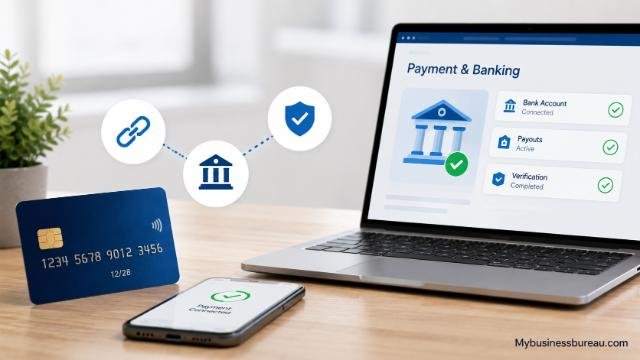
Receiving payments requires verified financial information.
Business sellers typically connect a bank account where sales proceeds are deposited. eBay may perform verification to ensure ownership and protect against fraud.
Keep banking information current whenever accounts change. Delayed updates may interrupt payouts or require additional verification.
Businesses should also monitor payout schedules, transaction reports, and payment summaries for accurate bookkeeping and financial planning.
Create High-Quality Product Listings
Professional listings significantly influence sales performance.
Each listing should include:
- Clear product title
- High-resolution photographs
- Detailed description
- Accurate specifications
- Product condition
- Shipping details
- Return policy
- Competitive pricing
Well-structured listings improve search visibility while reducing customer questions and return requests.
Using relevant keywords naturally within titles and descriptions helps buyers find your products more easily without excessive keyword repetition.
Listing Optimization Checklist
| Element | Best Practice |
| Title | Include important keywords naturally |
| Images | Multiple high-quality photos |
| Description | Complete and accurate |
| Category | Select the most relevant category |
| Pricing | Research competitors |
| Shipping | Offer clear delivery estimates |
| Returns | Publish transparent policies |
| Item Specifics | Complete every applicable field |
Organize Inventory Efficiently
Inventory management becomes increasingly important as your business grows.
Track stock levels carefully to prevent overselling or canceled orders. Businesses selling across multiple marketplaces should synchronize inventory whenever possible.
Maintaining accurate inventory improves seller performance metrics and customer satisfaction.
Consider organizing inventory by SKU, product category, warehouse location, supplier, or seasonal demand to simplify fulfillment operations.
Regular inventory audits also help identify damaged products, slow-moving stock, and replenishment needs.
Set Competitive Pricing Strategies
Pricing affects visibility, conversion rates, and profitability.
Research competing listings before setting prices. Consider product costs, shipping expenses, marketplace fees, advertising costs, and desired profit margins.
Business sellers may also adjust pricing during seasonal promotions, holiday events, or inventory clearance campaigns.
Dynamic pricing strategies should balance competitiveness with sustainable profitability rather than focusing solely on the lowest price.
Deliver Excellent Customer Service
Customer satisfaction contributes directly to seller reputation.
Respond promptly to buyer questions, provide accurate shipping updates, and resolve disputes professionally. Positive customer experiences often generate repeat business and favorable feedback.
Handling returns efficiently also demonstrates professionalism. Clear communication during shipping delays or product issues helps maintain buyer confidence.
Businesses should establish internal procedures for responding to customer inquiries consistently across all products.
Monitor Seller Performance Metrics
Seller performance reflects the quality of your business operations.
Monitor important metrics including:
- Order defect rate
- Late shipment rate
- Valid tracking uploads
- Customer feedback
- Return requests
- Case resolution
- Transaction cancellations
Improving these metrics increases buyer confidence and helps maintain eligibility for higher seller standards.
Regular performance reviews also identify operational improvements before problems become significant.
Expand Your Business with an eBay Store
As sales volume grows, consider subscribing to an eBay Store.
Store subscriptions provide additional listing allowances, branding opportunities, promotional tools, and inventory management features.
Businesses with large product catalogs often benefit from lower listing costs and enhanced marketing capabilities available through store subscriptions.
Before upgrading, compare subscription costs with expected savings and increased sales opportunities.
Use Marketing and Promotional Tools
Marketing helps increase product visibility beyond standard listings.
Business sellers can use promotional campaigns, coupons, volume discounts, sponsored listings, and seasonal sales to attract more buyers.
Combining strong listings with targeted promotions often produces better results than relying on discounts alone.
Businesses should analyze campaign performance regularly and refine promotions based on conversion rates and return on investment.
Maintain Tax and Financial Records
Accurate financial records simplify tax reporting and business planning.
Track sales revenue, marketplace fees, shipping costs, advertising expenses, refunds, and operating expenses throughout the year.
Many businesses integrate accounting software with marketplace transactions to reduce manual bookkeeping.
Consulting a qualified tax professional helps ensure compliance with local tax regulations and reporting requirements.
Protect Your Business Account
Account security should remain a priority throughout your business operations.
Enable two-factor authentication, use strong passwords, monitor login activity, and keep recovery information current.
Avoid sharing account credentials with unauthorized users. If multiple employees require access, establish clear internal security procedures.
Regularly reviewing account activity helps identify suspicious transactions before they become larger security issues.
Scale Your eBay Business Successfully
Growth requires improvements across inventory, logistics, customer service, marketing, and financial management.
Businesses that scale successfully often automate repetitive processes while maintaining high service standards. Investing in inventory software, shipping solutions, analytics, and customer relationship management can support continued expansion.
Expansion may also include sourcing additional suppliers, introducing private-label products, entering international markets, or diversifying product categories. Sustainable growth depends on balancing increased sales with efficient operations and consistent customer satisfaction.
Conclusion
An eBay business account provides the foundation for building a professional online selling operation. From registration and identity verification to inventory management, pricing, customer service, and marketing, every aspect of the account contributes to long-term success.
Businesses that maintain accurate information, optimize product listings, deliver reliable customer service, and monitor performance metrics are better positioned to grow their reputation and increase sales. By following the steps outlined in this guide, sellers can create a scalable business that serves customers effectively while supporting long-term commercial growth.
FAQ’s
Yes. In many cases, eBay allows eligible sellers to update their account type by providing business information and completing any required verification.
Requirements vary by country. Some sellers can register as sole proprietors, while others may need formal business registration depending on local laws and eBay’s verification requirements.
Creating a business account is generally free. However, listing fees, final value fees, advertising costs, and optional store subscription fees may apply depending on your selling activity.
Common requirements include government-issued identification, business registration documents, tax identification details, banking information, and proof of address. The exact documents depend on your location and business type.
Yes. Many business sellers offer international shipping, although available destinations, shipping services, customs requirements, and import regulations vary by country.
A properly configured business account with complete company information, clear policies, positive feedback, and professional customer service can increase buyer confidence and support stronger long-term sales performance.


