







Buying a home care business provides an opportunity to enter the healthcare industry with an established operation that offers services such as elderly assistance, personal care, and in-home support. Understanding the acquisition process helps buyers evaluate opportunities, reduce risks, and build a successful care organization.
Identify the Right Home Care Business Opportunity
Finding the right home care business requires evaluating the company’s services, market position, financial performance, and operational stability. Buyers should focus on businesses with strong client relationships, experienced caregivers, consistent revenue, and a reputation for quality care.
A home care company can operate under different models, including private duty home care, non-medical senior care, companion care, personal care assistance, and specialized support services. Each model has different staffing requirements, licensing obligations, and growth opportunities. Understanding the business model helps buyers select an acquisition target that matches their investment goals.
The home care industry includes several important service categories. Senior home care supports aging populations who need help with daily activities. Personal care services assist clients with tasks such as bathing, dressing, mobility, and medication reminders. Companion care focuses on emotional support, social interaction, transportation, and household assistance. Specialized home care may serve clients recovering from surgery, managing chronic conditions, or requiring disability support.
Before purchasing, buyers should analyze the local healthcare market. Population demographics, aging trends, competition, caregiver availability, and insurance structures influence the long-term potential of a home care business.
| Home Care Business Type | Primary Services | Common Customers | Growth Potential |
| Senior Home Care | Daily living assistance and companionship | Elderly individuals and families | High due to aging population |
| Personal Care Agency | Hygiene, mobility, and routine support | Clients needing regular assistance | Strong recurring revenue |
| Companion Care Business | Social support and household help | Seniors living independently | Moderate to high |
| Specialized Care Provider | Condition-specific support services | Clients with medical or disability needs | High with specialized expertise |
Evaluate Financial Records Before Purchasing
Reviewing financial records is one of the most important steps when buying a home care business. A buyer needs to understand whether the company generates reliable income, maintains healthy margins, and has realistic growth opportunities.
Financial evaluation should include revenue history, operating expenses, caregiver payroll, client acquisition costs, profitability, accounts receivable, and outstanding liabilities. Home care businesses often depend heavily on labor costs because caregivers represent the largest operating expense. Analyzing payroll structure helps determine whether the company can maintain profitability after acquisition.
Important financial documents include profit and loss statements, balance sheets, tax returns, payroll reports, client billing records, and cash flow statements. These documents reveal whether reported earnings reflect actual business performance.
Buyers should also examine revenue concentration. A business depending on only a few clients, referral sources, or healthcare partners may carry higher risk. A diversified client base creates stronger financial stability and reduces dependency on individual relationships.
Key financial indicators to review include:
| Financial Area | Evaluation Focus |
| Annual Revenue | Consistent income growth and client retention |
| Profit Margin | Ability to generate earnings after expenses |
| Payroll Expenses | Caregiver wages, benefits, and staffing efficiency |
| Client Retention | Stability of recurring service revenue |
| Accounts Receivable | Payment reliability and outstanding balances |
Review Licensing and Regulatory Requirements

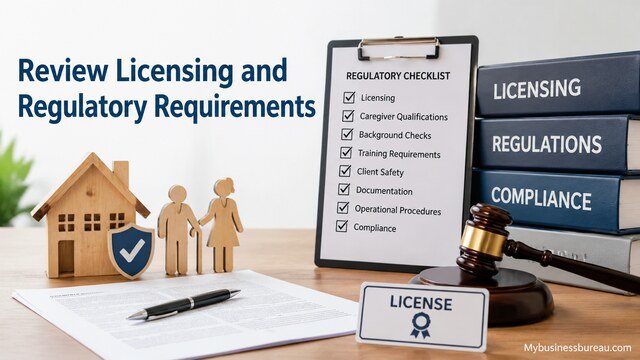
Understanding licensing requirements protects buyers from acquiring a business with compliance problems. Home care regulations vary by location, but most regions require businesses to meet standards related to caregiver qualifications, client safety, documentation, and operational procedures.
A home care license typically defines the services a company can legally provide. Some businesses provide non-medical assistance, while others operate under healthcare regulations requiring additional approvals. Buyers should confirm that all licenses are active, transferable, and compliant with current regulations.
Regulatory areas commonly include caregiver background checks, employee training, client assessments, service agreements, privacy protections, and health and safety procedures. Compliance failures can lead to penalties, lawsuits, loss of licenses, or damage to the company reputation.
The acquisition review should include:
- Current business licenses and permits
- State or regional healthcare approvals
- Employee certification records
- Client documentation procedures
- Privacy and data protection practices
- Insurance coverage requirements
A compliant home care business creates a stronger foundation for growth because healthcare customers and referral partners often prioritize trustworthy providers.
Analyze the Existing Client Base and Reputation
A strong client base is one of the most valuable assets when buying a home care business. Existing clients provide immediate revenue, market credibility, and opportunities for expansion.
Buyers should examine the number of active clients, average service hours, contract structures, and client retention rates. A company with long-term clients and positive relationships usually has stronger acquisition value than a business dependent on short-term customers.
The reputation of a home care provider influences referrals and future growth. Reviews, testimonials, community relationships, and professional partnerships demonstrate how clients and healthcare professionals view the company.
Important reputation factors include:
- Online reviews and ratings
- Referral relationships with hospitals and senior communities
- Client satisfaction records
- Complaint history
- Community presence
A home care business with trusted relationships can continue attracting new clients through referrals rather than relying only on paid marketing.
Assess Caregiver Workforce and Management Systems
The caregiver workforce determines the quality and scalability of a home care business. Buyers should evaluate employee retention, recruitment systems, training programs, and management processes before completing an acquisition.
Caregivers provide direct services to clients, making workforce quality a major factor in business success. A company with experienced caregivers, strong scheduling systems, and effective supervision usually operates more efficiently.
The buyer should review caregiver-related information, including:
- Number of active caregivers
- Employment status and turnover rates
- Training procedures
- Scheduling technology
- Compensation structures
- Employee satisfaction
Management systems also influence future growth. A business that relies entirely on the previous owner for scheduling, client relationships, or daily decisions may require significant transition planning after purchase.
Complete Due Diligence Before Closing the Acquisition
Due diligence allows buyers to verify business information before finalizing a purchase agreement. This process identifies hidden risks and confirms that the investment matches expectations.
A comprehensive due diligence process examines legal documents, financial statements, operations, employees, clients, technology systems, and market conditions. Buyers often work with accountants, attorneys, and healthcare advisors to evaluate the acquisition.
Key due diligence areas include:
- Financial verification
- Legal compliance review
- Employee and contractor evaluation
- Client agreement analysis
- Insurance assessment
- Technology and operational review
A buyer should investigate potential issues such as pending lawsuits, unpaid taxes, regulatory violations, employee disputes, or declining client numbers.
Choose the Best Acquisition Structure
Selecting the right purchase structure affects taxes, ownership rights, liabilities, and future control of the company. Buyers commonly choose between asset purchases and stock purchases depending on their goals.
An asset purchase allows the buyer to acquire selected business assets such as the brand, client relationships, equipment, technology systems, and operational materials. It may reduce exposure to certain historical liabilities.
A stock purchase transfers ownership of the existing company entity. This approach can simplify continuity but may include responsibility for existing obligations.
| Acquisition Structure | Advantages | Potential Concerns |
| Asset Purchase | Buyer selects assets and limits some liabilities | Contracts and licenses may require transfers |
| Stock Purchase | Easier operational continuity | Buyer may inherit existing obligations |
The purchase agreement should clearly define payment terms, transition support, included assets, employee arrangements, and seller responsibilities.
Secure Financing for the Home Care Business Purchase

Financing a home care acquisition requires planning because purchase prices vary based on revenue, profitability, location, and growth potential. Buyers can use personal funds, business loans, investor partnerships, or seller financing arrangements.
Traditional lenders often evaluate financial performance, credit history, business valuation, and industry experience. Healthcare businesses with stable recurring revenue may attract financing interest because demand for care services remains strong.
Common financing options include:
- Bank business acquisition loans
- Small business lending programs
- Private investors
- Seller financing
- Personal investment capital
A detailed business plan improves financing approval chances. The plan should explain the acquisition strategy, operational improvements, marketing approach, staffing plans, and financial projections.
Develop a Growth Strategy After Acquisition
Purchasing a home care business is only the beginning. Long-term success depends on improving operations, expanding services, retaining caregivers, and increasing client relationships.
Growth opportunities may include expanding geographic coverage, adding specialized care programs, improving digital marketing, partnering with healthcare organizations, and strengthening referral networks.
Technology can improve efficiency through scheduling platforms, electronic documentation systems, caregiver communication tools, and customer relationship management software. These systems help reduce administrative workload and improve service quality.
A successful post-acquisition strategy often focuses on:
- Increasing caregiver recruitment
- Improving client retention
- Building referral partnerships
- Expanding service offerings
- Strengthening operational systems
The home care market continues evolving as families seek reliable alternatives to institutional care. Businesses that combine compassionate service with efficient management are better positioned for long-term success.
Understand the Key Factors That Influence Home Care Business Value
The value of a home care business depends on multiple factors, including financial performance, reputation, operational systems, and market demand. Buyers should understand these elements before negotiating a purchase price.
Common valuation factors include revenue multiples, earnings performance, client retention, caregiver stability, and growth potential. A profitable business with strong systems generally commands a higher valuation than a company with operational challenges.
Important value drivers include:
- Recurring client revenue
- Low caregiver turnover
- Strong community reputation
- Effective management systems
- Diversified referral sources
- Geographic growth opportunities
A buyer who understands these factors can negotiate more effectively and identify businesses with strong investment potential.
Conclusion
Buying a home care business provides an opportunity to enter a growing healthcare sector while acquiring an established customer base, operational systems, and revenue streams. Successful acquisitions require careful evaluation of financial records, licensing compliance, caregiver operations, client relationships, and market conditions. By completing thorough due diligence, selecting the right acquisition structure, and developing a strong growth strategy, buyers can build a sustainable home care organization that delivers valuable services to individuals and families.
FAQ’s
The cost of buying a home care business varies based on revenue, profitability, location, client base, and market conditions. Small agencies may cost less, while established companies with strong earnings can require significantly higher investments.
A home care business can be profitable because many services generate recurring revenue from ongoing client care arrangements. Profitability depends on caregiver costs, pricing, client retention, and operational efficiency.
Healthcare experience can be beneficial but is not always required. Many buyers hire experienced managers or clinical professionals to oversee daily operations and maintain compliance.
Buyers should review financial statements, licenses, client records, caregiver information, legal documents, insurance coverage, and operational systems before purchasing a home care agency.
Yes. Buyers can use business loans, private investment, seller financing, or personal capital. Financing options depend on the company’s financial performance and the buyer’s qualifications.
The acquisition timeline varies depending on financing, due diligence, negotiations, and regulatory requirements. Many transactions take several months from initial evaluation to final closing.


