


Timothée Chalamet and Warren Buffett are influential Americans from different industries: entertainment and investing. Although no verified personal or professional connection exists between them, comparing their careers reveals shared principles such as careful decision-making, reputation building and long-term value creation.
Confirm the Exact Timothée Chalamet and Warren Buffett Connection
Begin by treating the pairing as a search query rather than an established relationship. Searches across mainstream entertainment sources, film databases and Berkshire Hathaway materials do not reveal a documented collaboration, meeting, investment arrangement or family connection between Timothée Chalamet and Warren Buffett. The absence of reliable reporting means that claims suggesting a close relationship should not be presented as fact.
Timothée Chalamet works primarily in film and entertainment. His recognised credits include Call Me by Your Name, Lady Bird, Dune, Dune: Part Two, Wonka and A Complete Unknown. His professional activities involve acting, producing, studio agreements, promotional appearances and creative partnerships. Warren Buffett’s public career centres on Berkshire Hathaway, corporate ownership, securities investing, annual shareholder communications and capital allocation. These activities occupy separate industries and have not produced a well-documented point of direct overlap.
The pairing may appear because search engines sometimes combine famous names when users compare wealth, success, public influence or business strategy. It may also arise from automated content, social media posts, celebrity comparison pages or mistaken image captions. A search result that places two names together does not prove that the people have met or worked together. Reliable confirmation requires a primary statement, a reputable interview, a corporate announcement or consistent reporting from established publications.
| Possible connection | Verified status | Evidence needed |
| Family relationship | No credible evidence found | Family records or direct biographical confirmation |
| Film collaboration | No credible evidence found | Studio announcement, credits or trade reporting |
| Berkshire Hathaway investment in Chalamet | No credible evidence found | Regulatory filing or company disclosure |
| Personal friendship | Not publicly established | Direct interview or reliable first-hand account |
| Shared event appearance | No notable verified connection identified | Event photography, official programme or reporting |
| Conceptual comparison | Reasonable | Public career records and documented strategies |
This distinction protects readers from misinformation. Chalamet and Buffett can be compared as examples of reputation building, selective decision-making and long-term success, but a comparison must not be rewritten as a personal relationship.
Review Timothée Chalamet’s Career Development
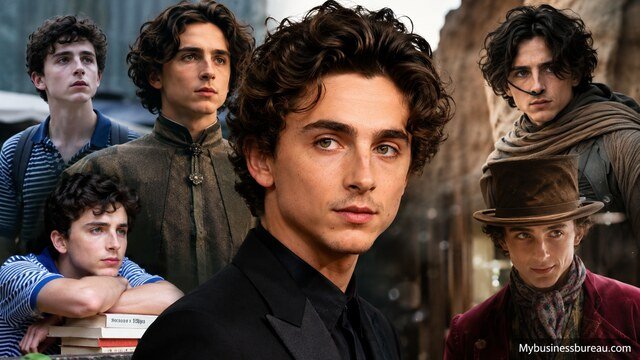
Trace Chalamet’s career from smaller television and film appearances to leading roles in globally distributed productions. He appeared in television projects before gaining wider recognition through films released in 2017. His performance in Call Me by Your Name earned an Academy Award nomination for Best Actor, while Lady Bird further strengthened his association with critically acclaimed independent cinema. Rotten Tomatoes describes 2017 as his breakout period and notes that the two films helped establish him as a prominent young performer.
Chalamet then expanded his range through projects with different commercial and artistic profiles. Little Women connected him with literary adaptation and ensemble drama. Dune placed him at the centre of a large-scale science-fiction franchise. Wonka required musical performance and family-oriented screen presence, while A Complete Unknown involved portraying musician Bob Dylan. His credit profile now includes acting, soundtrack work and producing, showing a movement beyond performance alone.
This progression demonstrates controlled expansion. Rather than remaining exclusively within low-budget drama or moving entirely into franchise films, Chalamet has alternated between prestige productions, established intellectual property and filmmaker-led projects. That balance can support artistic credibility while expanding audience reach.
Four parts of his career deserve particular attention:
Role selection shapes his public identity. Chalamet has chosen characters connected with romance, ambition, inherited responsibility, creativity and social pressure.
Director relationships influence the quality and visibility of his work. Collaborations with filmmakers such as Greta Gerwig, Denis Villeneuve, Luca Guadagnino and James Mangold connect him with distinct cinematic styles.
Franchise participation broadens commercial reach. The Dune films positioned him within a major studio property while preserving an association with serious dramatic performance.
Public presentation extends his influence beyond film. Fashion, interviews, premieres and promotional campaigns contribute to his marketability without replacing the importance of the underlying performances.
Chalamet’s career therefore illustrates how creative professionals can broaden their audience without abandoning the qualities that first made them distinctive.
Examine Warren Buffett’s Method of Building Value
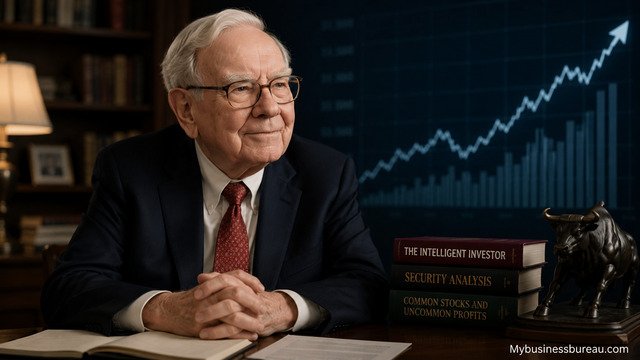
Study Warren Buffett through the principles most consistently associated with his investment record: understandable businesses, durable economics, capable management, disciplined pricing and long holding periods. Buffett’s public reputation developed not merely from buying shares but from allocating capital across operating businesses, public securities, insurance operations and acquisitions under Berkshire Hathaway.
Berkshire Hathaway’s structure allows capital produced by one part of the organisation to be deployed elsewhere. Insurance businesses have historically played an important role because premiums can generate investable funds before claims are paid. Berkshire also owns operating companies and holds substantial interests in publicly traded businesses. Buffett’s work therefore extends beyond ordinary stock selection into corporate finance, risk assessment, management evaluation and succession planning.
Four components define the method:
Business quality comes before market excitement. Buffett has repeatedly focused on companies with understandable products, reliable demand or strong competitive positions.
Purchase price determines the return available to an investor. A strong company can still be a poor investment when the buyer pays an excessive price.
Time horizon allows business performance to compound. Buffett’s approach generally gives successful businesses time to reinvest earnings, increase cash generation and strengthen customer relationships.
Temperament supports consistency. Investors must resist panic, excessive enthusiasm and the pressure to act simply because other market participants are active.
These principles do not guarantee profit, and they should not be treated as a personalised investment recommendation. Their wider relevance lies in disciplined evaluation. Buffett’s method encourages decision-makers to distinguish durable value from temporary attention.
Compare Their Approaches to Selective Decision-Making
Compare Chalamet’s project selection with Buffett’s capital allocation without pretending the two activities are identical. An actor commits time, reputation and creative energy to a film. An investor commits capital to a company or security. Both decisions involve uncertainty, opportunity cost and dependence on other people’s performance.
Chalamet cannot control every element of a production. A film’s outcome depends on the screenplay, director, cast, editing, marketing, distribution and audience response. Buffett cannot control every economic condition affecting an investment. A company’s results depend on management, competition, regulation, consumer behaviour and broader market conditions. Each person therefore selects opportunities in systems where success requires collaboration.
Their choices also produce cumulative effects. A strong performance can attract better scripts and directors. A well-judged investment can produce more capital for future investments. This process resembles a reputation and resource cycle: good decisions create access to stronger opportunities, while poor decisions can restrict future options.
| Decision factor | Timothée Chalamet | Warren Buffett |
| Primary resource committed | Time, talent and reputation | Capital and organisational resources |
| Opportunity selected | Film, role or production | Business, security or acquisition |
| Key collaborators | Directors, actors, producers and studios | Managers, boards, partners and subsidiaries |
| Main uncertainty | Creative and commercial reception | Business performance and valuation |
| Typical time horizon | Months or years per project | Often many years |
| Long-term asset | Body of work and public trust | Compounding capital and business ownership |
| Major risk | Typecasting or weak project execution | Permanent capital loss |
| Success measure | Performance quality, audience reach and career durability | Cash generation, business quality and long-term returns |
The comparison becomes useful when it stays at the level of decision principles. Chalamet evaluates creative opportunities. Buffett evaluates economic opportunities. Both benefit from patience, selectivity and the ability to decline options that do not fit their long-term aims.
Distinguish Public Attention From Durable Value
Separate immediate popularity from lasting achievement. Chalamet works in a field where opening weekends, reviews, awards campaigns and social media reactions create intense short-term attention. Buffett operates in markets where share-price movements, quarterly earnings and economic news can generate similar short-term pressure. In both environments, the loudest signal is not always the most meaningful one.
For an actor, durable value comes from performances that remain relevant, trusted creative relationships and the ability to succeed across different kinds of production. A viral appearance may increase visibility, but visibility alone does not establish a sustainable acting career. Chalamet’s combination of independent films and major studio releases provides a stronger foundation than publicity detached from substantive work.
For an investor, durable value comes from the cash-producing capacity of businesses and the price paid to acquire that capacity. A rapidly rising share price may reflect genuine improvement, temporary enthusiasm or both. Buffett’s philosophy directs attention towards underlying economics rather than daily quotation changes.
This distinction explains one valid reason people may search for Timothée Chalamet and Warren Buffett together. Both represent forms of public success, yet their careers demonstrate that attention becomes valuable only when supported by repeatable performance. Chalamet must continue delivering credible work. Buffett and Berkshire Hathaway must continue allocating resources effectively. Reputation can open a door, but results determine whether the door remains open.
Apply Long-Term Thinking to Creative and Financial Careers
Use long-term thinking to evaluate a career as a sequence rather than a collection of isolated wins. Chalamet’s early acclaim created momentum, but maintaining that momentum required later decisions that expanded rather than diluted his position. A career consisting only of attempts to repeat one successful role would carry the risk of typecasting. Alternating between intimate dramas, literary adaptations, science fiction, musical fantasy and biographical work gives him more ways to remain relevant.
Long-term investing follows a related principle. A portfolio should not be judged solely by one successful trade or one difficult quarter. The more meaningful questions concern the quality of the decision process, the sustainability of returns and the protection of capital. Buffett’s standing rests on results accumulated over decades rather than on a single transaction.
Long-term thinking also changes how failure is interpreted. A disappointing film does not automatically destroy a strong acting career, just as a declining investment does not automatically invalidate an entire investment philosophy. The important issue is whether the decision was reasonable with the information available and whether the person learns from the outcome.
The practical lesson is to build a system that can survive imperfect results. Creative professionals can diversify skills and relationships. Business owners can preserve liquidity and avoid excessive debt. Investors can limit exposure to risks they do not understand. Students and employees can develop abilities that remain useful across several roles. Long-term success depends less on avoiding every error than on preventing one error from becoming irreversible.
Assess Their Different Forms of Personal Brand Value
Evaluate personal brand value according to the field in which it operates. Chalamet’s name can influence audience interest, studio confidence, fashion coverage and promotional reach. His brand depends on artistic credibility, cultural relevance, recognisable style and the perception that he can carry both specialised and mainstream projects.
Buffett’s personal brand operates differently. It is closely tied to judgement, candour, frugality, patience and shareholder communication. His reputation has supported confidence in Berkshire Hathaway, although the company’s value depends on its businesses, assets, managers and governance rather than on public image alone.
Chalamet’s brand is audience-facing. People encounter it through performances, trailers, interviews, award ceremonies, advertising and fashion. Buffett’s brand is trust-facing. Shareholders, managers and sellers of businesses may consider his record and operating philosophy when deciding whether to work with Berkshire.
Four factors support both forms of brand value:
Consistency gives audiences and stakeholders a stable basis for expectation.
Distinctiveness makes the individual easier to recognise within a crowded field.
Credibility connects public claims with observable behaviour.
Adaptability allows the person to evolve without losing the qualities that generated trust.
The comparison shows that a personal brand is not merely visual identity or popularity. It is a repeated promise about the kind of judgement, work or experience associated with a name.
Avoid False Claims About Their Wealth and Investments
Do not invent a financial relationship simply because one person is wealthy and the other is famous. Online articles often imply that a prominent investor owns, funds or advises a celebrity without providing regulatory filings, direct statements or company records. Such claims can spread quickly because they combine recognisable names with curiosity about money.
Chalamet’s earnings may come from film compensation, producing arrangements, endorsements, residuals and other commercial agreements. Exact figures reported by entertainment outlets can vary and may exclude taxes, fees, expenses or contractual conditions. Public estimates of celebrity net worth are especially unreliable when their methodology is unclear.
Buffett’s wealth is largely associated with his ownership interest in Berkshire Hathaway rather than a conventional salary or a vault of immediately spendable cash. The market value of such holdings changes, so any current net-worth figure requires a dated financial source. It is also important to distinguish Buffett’s personal assets from Berkshire Hathaway’s corporate investments.
No credible evidence presently shows that Buffett has made a direct personal investment in Chalamet’s career, that Berkshire Hathaway finances his films or that Chalamet has a notable public role within Berkshire. A film may use services or products connected indirectly with a Berkshire-owned business, but ordinary commercial contact would not establish a meaningful partnership between the two individuals.
Verify Future Claims With Reliable Sources
Check future reports through a clear evidence hierarchy. Start with direct announcements from Berkshire Hathaway, production companies, film studios, representatives or the individuals themselves. Followed with recognised financial newspapers, major news agencies and established entertainment trade publications. Use databases for credits and release information, but avoid treating user-edited pages or unsourced celebrity sites as final authority.
A genuine collaboration would probably create a traceable record. A film investment could appear in production announcements, financing disclosures or trade coverage. A corporate partnership could be confirmed through a press release. A public meeting might be documented through event organisers, reputable photographs or direct interviews.
Readers should also inspect dates. An old satirical article can be mistaken for current news. A headline may refer to another person with a similar name. An image may show Chalamet with an older filmmaker or executive and be incorrectly labelled as Buffett. The image returned for this broad pairing, for example, depicts Chalamet with filmmaker Martin Scorsese rather than Warren Buffett, demonstrating why captions and visual identification must be checked carefully.
Verification becomes even more important when artificial intelligence and automated publishing systems recombine fragments from unrelated sources. Repetition across multiple low-quality pages does not equal independent confirmation. Several pages may copy the same original error.
Draw Practical Lessons From Their Separate Success
Use the comparison to extract practical lessons rather than manufacturing a celebrity story. Chalamet’s career suggests that specialised credibility can coexist with broad commercial ambition. Buffett’s career suggests that patience and disciplined selection can outperform constant activity. Together, these examples support a model of focused growth.
First, build competence before maximising exposure. Chalamet developed performance experience before becoming the centre of major franchises. Buffett spent years studying businesses, securities and financial statements before becoming one of the world’s most closely watched investors.
Second, choose opportunities that improve future options. A well-received role can lead to stronger scripts. A productive business investment can create capital for the next acquisition. The best opportunity therefore provides more than an immediate payment. It strengthens the platform from which later decisions are made.
Third, protect reputation. Chalamet’s reliability affects whether filmmakers and studios want to work with him. Buffett’s credibility affects whether managers, shareholders and business owners trust Berkshire. Reputation grows slowly through repeated conduct and can be damaged quickly by inconsistency.
Fourth, remain adaptable without becoming directionless. Chalamet can change genres while maintaining a commitment to demanding roles. Buffett’s investment activity has evolved as markets, available capital and Berkshire’s size have changed. Adaptation works when the method changes but the central standards remain clear.
Conclusion
The verified story behind Timothée Chalamet and Warren Buffett is not a documented friendship, partnership or family relationship. It is a comparison between two high-profile people who have created value in fundamentally different fields.
Chalamet has built a career through role selection, artistic range, filmmaker relationships and movement between independent cinema and major studio productions. Buffett built his reputation through business analysis, disciplined capital allocation, long holding periods and an emphasis on durable economic value. One commits talent and reputation to creative projects. The other commits capital and organisational resources to businesses.
Their careers share useful principles: select opportunities carefully, think beyond immediate attention, cultivate trusted relationships, protect credibility and allow strong decisions to compound. Those parallels are meaningful, but they should never be used to imply an unsupported personal connection.
FAQ’s
No credible public evidence indicates that Timothée Chalamet and Warren Buffett are related.
No verified film, corporate project, investment arrangement or public collaboration between them has been identified.
There is no credible public evidence that Buffett has directly invested in Chalamet or his acting career.
No notable professional role or direct partnership between Chalamet and Berkshire Hathaway has been publicly established.
The pairing may come from comparison searches, automated content, mistaken captions or curiosity about fame, wealth and career success. A joint search does not establish a real-world relationship.
Chalamet’s career highlights creative selection, range and reputation, while Buffett’s career highlights patience, valuation and compounding. Both demonstrate the value of disciplined long-term decision-making.
