



Artificial intelligence is reshaping marketing and sales by helping businesses analyze customer behavior, automate tasks, personalize campaigns, and improve lead generation. By using AI throughout the customer journey, companies gain better insights, reduce costs, strengthen customer engagement, prioritize leads, and make more accurate, data-driven decisions that boost sales performance.
Identify Business Goals Before Implementing AI
Successful AI adoption starts with clear business objectives. Companies that implement AI without measurable goals often struggle to generate meaningful results. Marketing and sales leaders should define the exact outcomes they want to improve, such as lead generation, customer retention, conversion rates, revenue growth, or customer acquisition cost reduction.
AI systems perform best when organizations provide structured goals and measurable performance indicators. A business focused on eCommerce growth may prioritize personalized recommendations and automated email campaigns, while a B2B company may use AI for lead scoring and sales forecasting.
Clear objectives also help teams select the right platforms and datasets. Marketing departments may focus on customer segmentation and content optimization, while sales departments may require predictive analytics and CRM automation. Defining goals early ensures the AI strategy aligns with broader business priorities.
Common AI Marketing and Sales Goals
| Goal | AI Application | Expected Outcome |
| Lead Generation | Predictive targeting | Higher-quality leads |
| Customer Engagement | Personalized messaging | Increased interaction |
| Sales Forecasting | Predictive analytics | Better revenue planning |
| Customer Retention | Behavioral analysis | Reduced churn |
| Conversion Optimization | AI testing tools | Higher sales conversions |
Collect and Organize Customer Data
AI systems depend on high-quality data. Businesses must gather customer information from multiple sources, including websites, CRM systems, social media platforms, email campaigns, and sales interactions. Accurate data improves machine learning performance and enables more precise predictions.
Customer data includes demographics, browsing behavior, purchase history, engagement metrics, and communication preferences. AI analyzes these signals to identify patterns and predict future actions. Companies that centralize their data often create more consistent customer experiences across marketing and sales channels.
Organizing data also requires strong data governance practices. Duplicate records, incomplete profiles, and outdated information reduce AI effectiveness. Businesses should regularly clean and update databases to maintain reliable insights and improve decision-making accuracy.
Data privacy regulations also play an important role. Organizations must comply with frameworks such as GDPR and CCPA when collecting and processing customer information. Transparent data policies build customer trust and reduce compliance risks.
Use AI for Customer Segmentation
Customer segmentation allows businesses to divide audiences into meaningful groups based on behavior, interests, purchasing patterns, and engagement history. AI enhances segmentation by identifying hidden trends that traditional analytics may overlook.
Machine learning algorithms analyze thousands of customer interactions to create highly targeted audience segments. These segments enable marketing teams to deliver personalized campaigns that resonate with specific customer groups. Personalized experiences often improve click-through rates, engagement, and sales conversions.
AI-driven segmentation also supports dynamic audience updates. Instead of relying on static categories, AI continuously adjusts customer groups based on real-time behavior. For example, a customer browsing premium products may automatically move into a high-value segment.
Sales teams benefit from segmentation through more accurate lead prioritization. AI helps representatives identify customers with the highest purchase intent, allowing teams to focus efforts on the most promising opportunities.
Types of AI-Based Customer Segmentation
| Segmentation Type | Data Used | Marketing Benefit |
| Behavioral | Website activity, purchases | Better personalization |
| Demographic | Age, location, income | Improved targeting |
| Psychographic | Interests, lifestyle | Stronger messaging |
| Predictive | Purchase probability | Higher conversion rates |
| Engagement-Based | Email opens, clicks | Optimized campaigns |
Automate Marketing Campaigns with AI
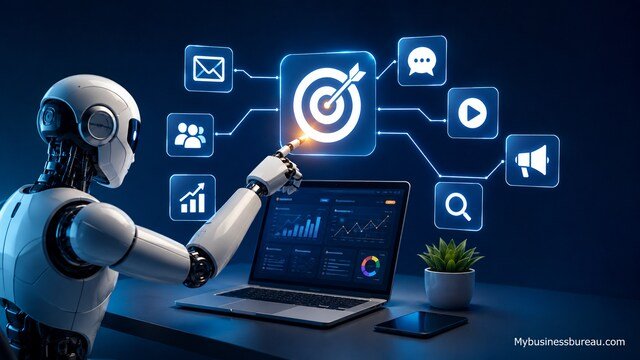
Marketing automation platforms powered by AI streamline repetitive tasks and improve campaign performance. Businesses use AI to automate email marketing, social media posting, ad targeting, and customer follow-ups.
AI-driven automation tools analyze customer behavior and trigger personalized messages at optimal times. For example, abandoned cart emails can automatically include product recommendations based on browsing history. This level of personalization increases customer engagement and encourages purchases.
Automation also improves operational efficiency. Marketing teams spend less time managing repetitive workflows and more time developing strategy and creative content. AI tools can schedule campaigns, optimize subject lines, and recommend the best communication channels for each audience segment.
Sales and marketing alignment improves when automation platforms integrate with CRM systems. Customer interactions become visible across departments, enabling smoother lead nurturing and stronger communication between teams.
Popular AI-powered automation capabilities include:
- Personalized email workflows
- AI-generated ad targeting
- Chatbot interactions
- Dynamic website content
- Automated lead nurturing
- Campaign performance optimization
Improve Content Creation with AI Tools
AI assists marketers in creating blog posts, product descriptions, email copy, social media captions, video scripts, and advertising content. Content generation tools accelerate production while helping teams maintain consistency across channels.
AI can analyze search trends, customer questions, and competitor strategies to recommend relevant topics. This improves content relevance and supports SEO performance. Businesses can also use AI to identify semantic keywords, optimize headlines, and improve readability.
Content personalization has become one of the strongest applications of AI. Instead of showing identical messages to every customer, businesses can tailor content based on user behavior, interests, and purchase history. Personalized content often generates higher engagement and stronger conversion rates.
Human oversight remains essential. AI-generated content should align with brand voice, accuracy standards, and customer expectations. Businesses that combine AI efficiency with human creativity often produce the most effective marketing materials.
Enhance Lead Generation Using Predictive Analytics
Predictive analytics helps businesses identify potential customers who are most likely to convert. AI systems analyze historical sales data, customer behavior, and engagement patterns to predict future outcomes.
Sales teams use predictive lead scoring to rank prospects based on purchase probability. High-scoring leads receive priority attention, improving efficiency and increasing closing rates. AI also helps identify the channels and campaigns generating the highest-quality leads.
Marketing teams benefit from predictive insights by optimizing advertising spend. AI can determine which audiences are more likely to respond to specific campaigns, reducing wasted budget and improving return on investment.
Predictive analytics also improves customer lifetime value forecasting. Businesses can identify customers likely to make repeat purchases and develop retention strategies that maximize long-term revenue.
Key Benefits of Predictive Analytics
| Function | AI Capability | Business Impact |
| Lead Scoring | Conversion prediction | Faster sales cycles |
| Revenue Forecasting | Trend analysis | Improved planning |
| Customer Retention | Churn prediction | Better loyalty |
| Campaign Optimization | Performance forecasting | Higher ROI |
| Cross-Selling | Product recommendation | Increased revenue |
Deploy AI Chatbots for Customer Interaction
AI chatbots provide instant communication and customer support across websites, apps, and messaging platforms. Businesses use chatbots to answer questions, qualify leads, recommend products, and schedule appointments.
Modern chatbots use natural language processing to understand customer intent and provide conversational responses. These systems improve customer experience by delivering fast assistance without requiring human intervention for every inquiry.
Sales teams use AI chatbots to qualify prospects before transferring them to representatives. Chatbots can collect contact information, identify customer needs, and guide users through the early stages of the buying process. This reduces response times and improves lead management efficiency.
Customer support also benefits from AI-driven automation. Chatbots handle common requests such as order tracking, refund policies, and account assistance, allowing support teams to focus on complex issues.
Businesses should design chatbot workflows carefully to ensure smooth escalation to human agents when necessary. Balanced automation improves both efficiency and customer satisfaction.
Personalize Customer Experiences Across Channels
Personalization has become essential for marketing and sales success. AI enables businesses to deliver individualized experiences across websites, email campaigns, social media, mobile apps, and advertising platforms.
Recommendation engines analyze customer behavior and suggest products, services, or content tailored to individual preferences. Streaming platforms, online retailers, and SaaS companies frequently use recommendation systems to improve engagement and increase revenue.
AI also personalizes communication timing and messaging. Customers may receive different offers based on browsing history, purchase frequency, or geographic location. Personalized interactions create stronger relationships and encourage repeat purchases.
Omnichannel consistency is equally important. Customers expect seamless experiences regardless of whether they interact through email, social media, websites, or customer support channels. AI helps synchronize messaging and maintain consistent personalization across platforms.
Optimize Advertising Campaigns with Machine Learning
Machine learning improves digital advertising by analyzing campaign performance and automatically adjusting targeting, bidding, and creative elements. Businesses use AI to maximize advertising efficiency while reducing wasted spend.
AI advertising platforms evaluate audience behavior in real time. Algorithms identify users most likely to convert and adjust ad placements accordingly. This improves campaign relevance and increases conversion opportunities.
Dynamic creative optimization allows AI to test multiple headlines, images, and calls-to-action simultaneously. The system then prioritizes the highest-performing combinations for different audience segments.
Advertising optimization also includes budget allocation. AI systems can shift spending toward high-performing campaigns and reduce investment in underperforming channels. This improves return on ad spend and supports scalable growth strategies.
AI Advertising Optimization Areas
| Optimization Area | AI Function | Result |
| Audience Targeting | Behavioral analysis | Better reach |
| Bid Management | Automated bidding | Lower ad costs |
| Creative Testing | Variant analysis | Higher engagement |
| Budget Allocation | Performance tracking | Improved ROI |
| Conversion Tracking | Attribution modeling | Better insights |
Integrate AI with CRM Systems
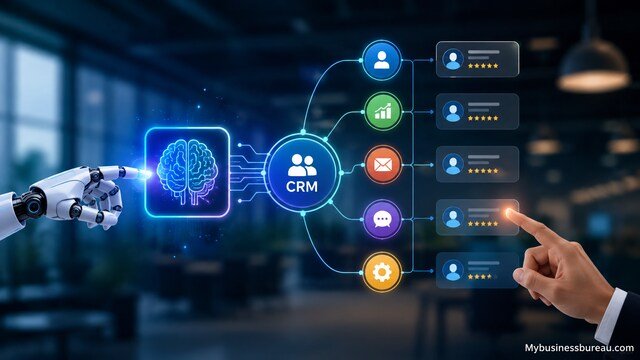
Customer relationship management systems become significantly more powerful when integrated with AI capabilities. AI-enhanced CRM platforms help businesses manage leads, track customer interactions, and automate sales workflows.
AI analyzes CRM data to identify trends, predict customer behavior, and recommend next actions for sales representatives. This improves productivity and helps teams prioritize high-value opportunities.
Sales forecasting also becomes more accurate through AI integration. Predictive models evaluate historical performance, seasonal trends, and customer behavior to estimate future revenue. Better forecasting supports strategic planning and resource allocation.
AI-powered CRM systems also improve customer retention by identifying at-risk accounts. Businesses can proactively engage customers before churn occurs, increasing loyalty and long-term profitability.
Common AI CRM features include:
- Automated lead scoring
- Opportunity forecasting
- Smart email recommendations
- Sales pipeline analysis
- Customer sentiment tracking
- Workflow automation
Measure AI Performance and Adjust Strategies
Businesses must continuously evaluate AI performance to ensure long-term success. Marketing and sales teams should track key performance indicators that align with business goals.
Important metrics include conversion rates, customer acquisition costs, email engagement, lead quality, retention rates, and revenue growth. AI systems generate large amounts of performance data that businesses can use to refine strategies and improve decision-making.
Testing and optimization are ongoing processes. AI models require regular updates to remain accurate as customer behavior and market conditions change. Businesses should review campaign outcomes, retrain algorithms when necessary, and adjust workflows based on new insights.
Cross-functional collaboration also strengthens AI initiatives. Marketing, sales, analytics, and customer support teams should share insights and coordinate strategies to maximize the value of AI technologies.
Train Teams to Work Alongside AI Technologies
AI tools produce stronger results when employees understand how to use them effectively. Businesses should train marketing and sales teams on AI platforms, automation workflows, data interpretation, and customer engagement strategies.
Training programs help employees adapt to evolving technologies and reduce resistance to automation. Team members who understand AI capabilities can make better decisions, identify opportunities, and avoid overreliance on automated systems.
Human expertise remains essential for relationship building, strategic planning, negotiation, and creative thinking. AI enhances these functions rather than replacing them completely. Businesses that combine human judgment with AI-driven insights often achieve stronger performance outcomes.
Leadership teams should also establish ethical guidelines for AI usage. Responsible implementation improves transparency, protects customer trust, and supports long-term business sustainability.
Conclusion
AI has become a powerful driver of marketing and sales growth across industries. Businesses use AI to automate workflows, personalize customer experiences, improve advertising performance, optimize lead generation, and enhance sales forecasting. Companies that adopt AI strategically often achieve faster growth, stronger customer relationships, and more efficient operations.
Successful AI implementation requires clear goals, high-quality data, continuous optimization, and employee training. Organizations that combine intelligent automation with human creativity and strategic thinking create more meaningful customer experiences and stronger competitive advantages.
As AI technology continues to evolve, businesses that embrace innovation and data-driven decision-making will remain better positioned to adapt to changing customer expectations and market demands.
Visit mybusinessbureau.com for expert business insights and smart growth strategies.
FAQ’s
Small businesses can use AI for email automation, social media scheduling, chatbot support, customer segmentation, and personalized advertising. Many AI tools offer affordable subscription plans designed for smaller teams.
AI does not replace sales professionals entirely. AI automates repetitive tasks and provides insights, while human representatives handle relationship building, negotiations, and complex decision-making.
Businesses frequently use AI-powered CRM systems, marketing automation platforms, chatbots, predictive analytics tools, and content generation software to improve marketing efficiency and customer engagement.
AI analyzes customer behavior and historical data to identify high-intent prospects. Predictive lead scoring helps sales teams focus on leads most likely to convert into customers.
Yes. Personalized experiences improve customer engagement, increase trust, and encourage repeat purchases. AI helps businesses tailor recommendations, messaging, and offers to individual users.
Common challenges include poor data quality, lack of employee training, integration difficulties, privacy compliance requirements, and unrealistic expectations regarding automation capabilities.
